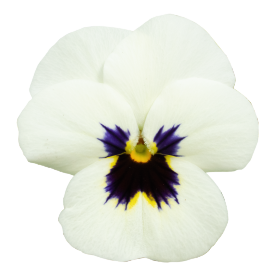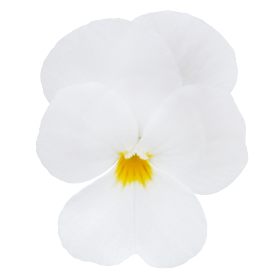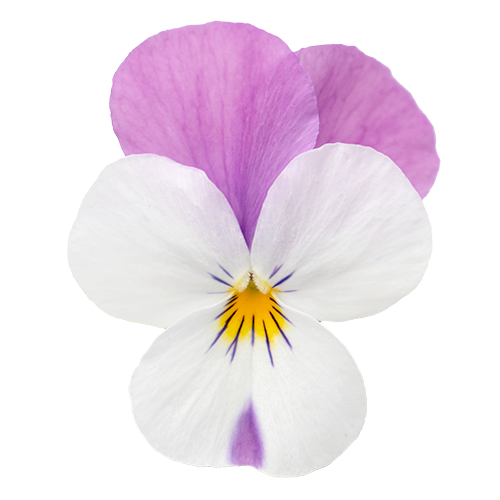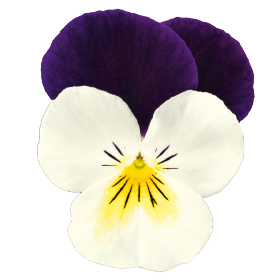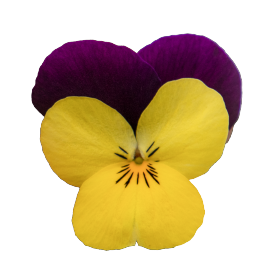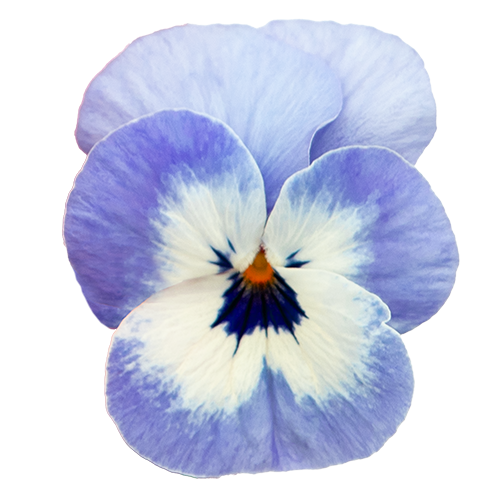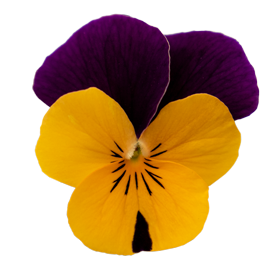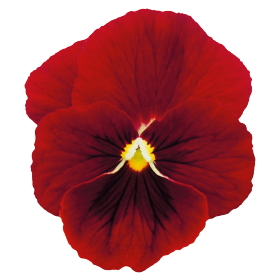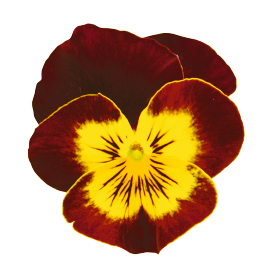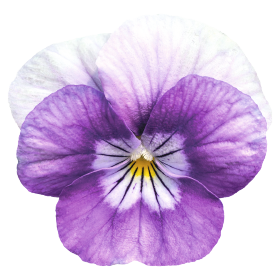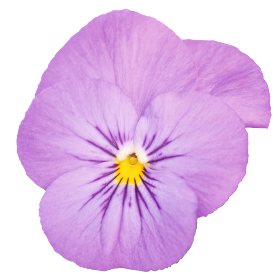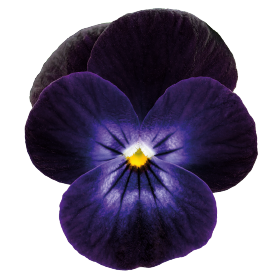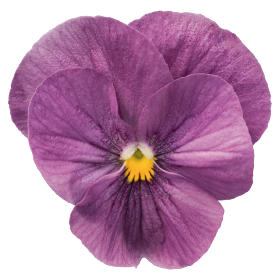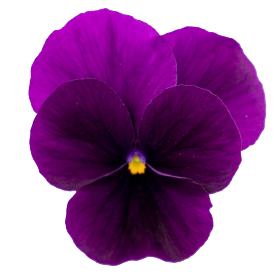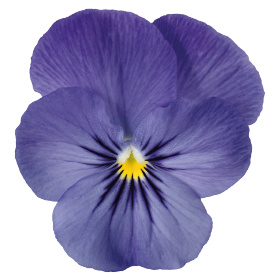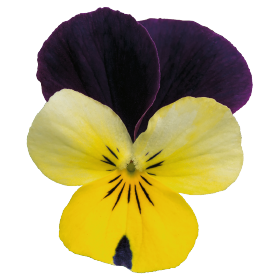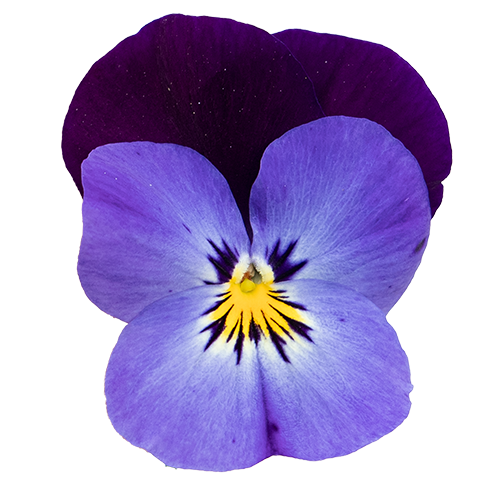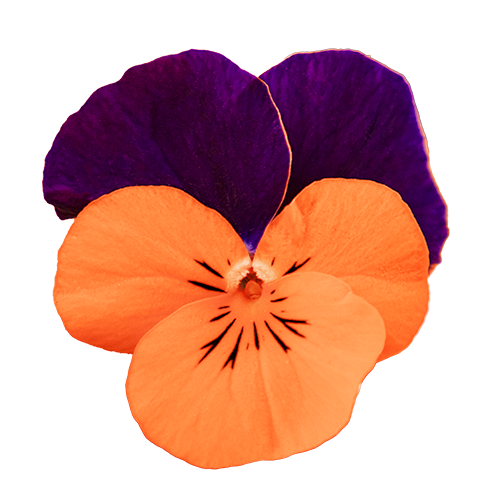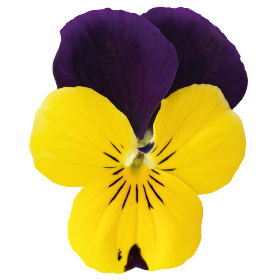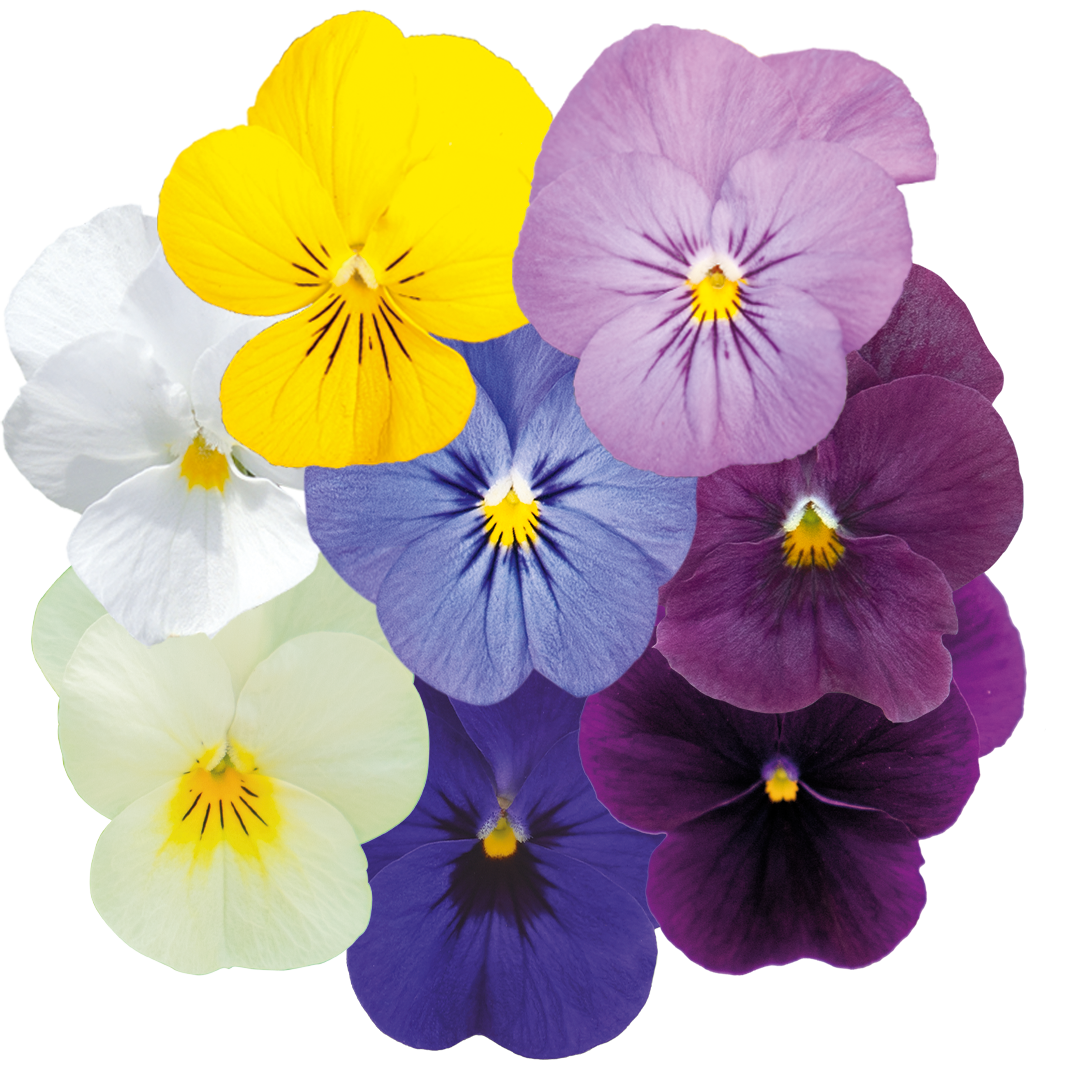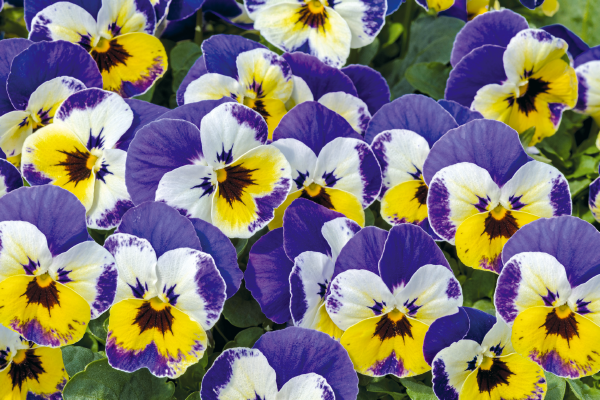

Admire® Jolly® Face
Item no.: VC0103R/EMost Professional Viola cornuta Series on the Market
- Early, consistent pack performance
- Central flowers on short flower stems
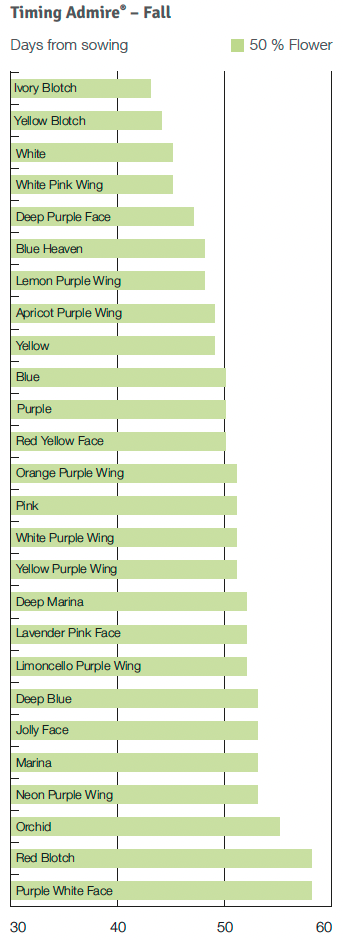
- Narrow flowering window across the series
- Excellent branching
- Superior production in fall and spring

- Crop Time
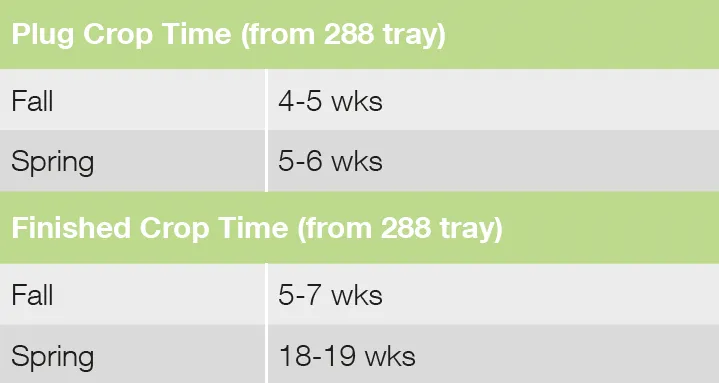
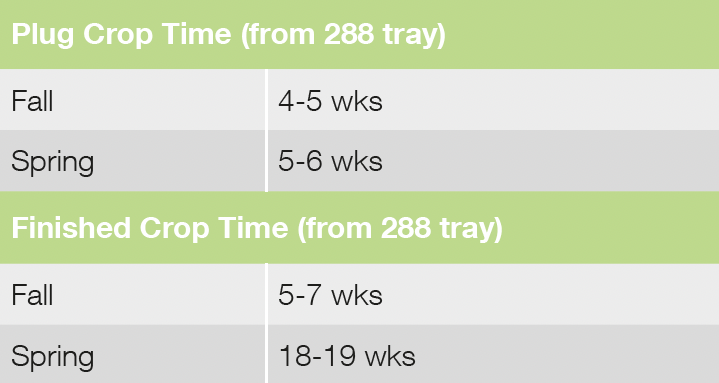
- Spring: 23 - 25 weeks , Autumn: 8 - 12 weeks
- Height ∅
- 8 ″ / 20 cm
- Width ∅
- 7 ″ / 18 cm
- Exposure
- Sun - Partial shade
- Seed Form
- Raw Seed, BeGreen Priming
- Product Use
- Packs, Pots, Mixed Containers, Landscape, Mass Plantings
- Family, Origin
- Violaceae, Europe
- Minimum Germ. Rate
- 90 %
Technical Guide
Flowering Type: Facultative long day plant. Long days will also enhance flowering.
Flowering Mechanism: Day length and irradiance are the primary mechanisms that initiates flowering. High light intensity, 12-18 mol/m2/day (3,500-5,000 ft.candles or 35,500-50,000 lx) will initiate flowering once plants reach 2-3 true leaves. Cool night temperatures below 15 °C (59 °F) will promote early flowering.
Germination: Maintain optimal conditions for seedling development, should begin on the day of sowing until root emergence. Expect root emergence in 3-4 days.
Cover: Cover lightly with a thin layer of coarse vermiculite.
Sowing method: 1 seed per plug.
Media: pH 5.5-5.8; EC < 0.5.
Temperature: Maintain 18-22 °C (64-72 °F) until root emergence, then lower the temperature
gradually to 17‑18 °C (62‑64 °F). Once cotyledons are fully expanded the temperature can be reduced further to 16.5‑17 °C (62‑63 °F).
Moisture: Begin with saturated (5) for days 1‑5 and then reduce to a moist (3) on day 6. As the seedlings become fully developed with expanded cotyledons the moisture level can be decreased further to a medium (2) on day 9. At this point alternate between a wet (4) and a medium (2) between watering.
Humidity: 95‑100 % until day 5; then reduce to 40‑60 % to prevent hypocotyl stretch. Provide proper ventilation and horizontal airflow to improve oxygen levels in the media.
Light: Light is not necessary for germination to occur. If using a germination chamber providing a light source of 10‑100 ft. candles (100‑1,000 lx) will improve germination and overall quality. Going into the second stage of germination, on approximately day 6‑7 the light levels can be increased to 6‑8 mol/m2/day (2,000‑2,500 ft. candles or 20,000‑25,000 lx). This is after germination is finished.
Fertilizer: Begin feeding early using a calcium based fertilizer at lower rates to keep an adequate amount of calcium and nitrogen supplied to the seedlings. On days 5‑7 begin feeding with a calcium based fertilizer (14‑2‑14; 13‑2‑13; 15‑5‑15 or 17‑5‑17) at 50‑60 ppm. Maintain the EC between 0.5 and 0.75. Keep phosphorous levels between 6‑8 ppm and boron supplied at 0.5 ppm.
Plug Bulking and Flower Initiation: Maintain optimal conditions during the vegetative stage from cotyledon expansion to flower initiation. When the seedlings root to the edge of the plug and reach the 4-6 true leaf stage, flower initiation will occur.
Media: pH 5.5-5.8. Maintain pH levels in the lower range to avoid outbreaks of thielaviopsis and boron deficiencies which may cause tip abortion. EC 0.75-1.0; keeping the EC less than 1.5 can help control outbreaks of thielaviopsis and other root problems.
Light: The light levels need to be at 12-18 mol/ m2/day, 3,500-5,000 ft. candles (35,000-50,000 lx). If high temperatures are experienced lowering the light level slightly to 8-10 mol/m2/day (2,500-3,000 ft. candles or 25,000-30,000 lx) can help to further bulk the plug.
Temperature: Maintain 18 °C (64 °F ) nights, 18-21 °C (64-70 °F) days. When seedlings are well established the night temperature can be lowered to 15 °C (59 °F ) to tone the plants. An average daily temperature of 19.5 °C (67 °F ) will give the fastest finish.
Moisture: Alternate between a wet (4) and a medium (2) between watering. Let plants reach a medium before re-saturating to a wet (4). Avoid reaching a dry (1) since this can promote root problems.
Fertilizer: Continue feeding with calcium based fertilizers (14-4-14, 15-5-15 and 17-5-17) at 100-150 ppm. Keep phosphorous levels between 8-10 ppm and boron levels at 0.5 ppm in the irrigation water.
Growth Regulators: Several growth regulators can be used successfully to prevent hypocotyls stretch and control plants from getting soft growth. Some commonly used growth regulators are: B-Nine (daminozide) used as a spray at 2,500-5,000 ppm; A-Rest (ancymidol) used as a spray at 3-4 ppm. At times tank mixes are used combining B-Nine and A-Rest and B-Nine with Cycocel. These combinations tend to give longer lasting effects. Pansies are also very responsive to a DIF of 3 °C (38 °F).
Fungicides: Preventative drenches can be made with fungicides for the control of thielaviopsis and other soil borne diseases.
Transplant Ready: Under optimal conditions plugs are ready at 4 weeks.
Media: pH 5.5-5.8; keep the pH in the lower range. This will help control the outbreak of thielaviopsis. EC 1.25-1.5.
Light: Provide 14-22 mol/m2/day (4,000-6,000 ft. candles or 35,000-50,000 lx).
Temperature: Maintain 20-21 °C (68-70 °F) nights, 18-19 °C (64-66 °F) days for the first 14 days or until the roots reach the bottom of the container. Thereafter temperatures may be lowered to 16-18 °C (60-64 °F) day and night. An ADT (average daily temperature) of 19 °C (66 °F) will give the fastest finished crop. Night temperatures below 15 °C (59 °F) will enhance flowering.
Moisture: Alternate between moisture levels wet (4) and medium (2). Let plants reach a medium (2) before resaturating to a wet (4).
Humidity: 40-60 % humidity is ideal.
Fertilizer: Fertilize with a calcium-based feed 14-4-14; 15-5-15 or 17-5-15 at 100-150 ppm as needed. Phosphorus levels should be between 8-12 ppm and boron between 0.5-0.75. Keeping the EC below 1.5 will help prevent root problems.
Growth Regulators: B-Nine (daminozide) used as a spray at 2,500-5,000 ppm, A-Rest (ancymidol) used as a spray at 3-4 ppm. At times tank mixes are used combining B-Nine and A-Rest and B-Nine with Cycocel (chlormequat chloride). These combinations tend to give longer lasting effects.
Fungicide: Apply fungicides as needed to control root and foliar diseases. Follow the labeled recommended rates.
Common Diseases: Botrytis, alternaria leaf spot, downy mildew, thielaviopsis root rot and crercospora leaf spot.
Pests: Primarily aphids and thrips.
Post Harvest: Fertilize with potassium nitrate at 150 ppm 1-2 weeks prior to shipping.




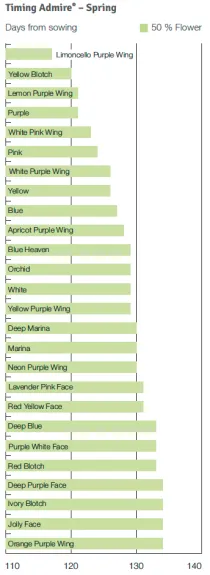
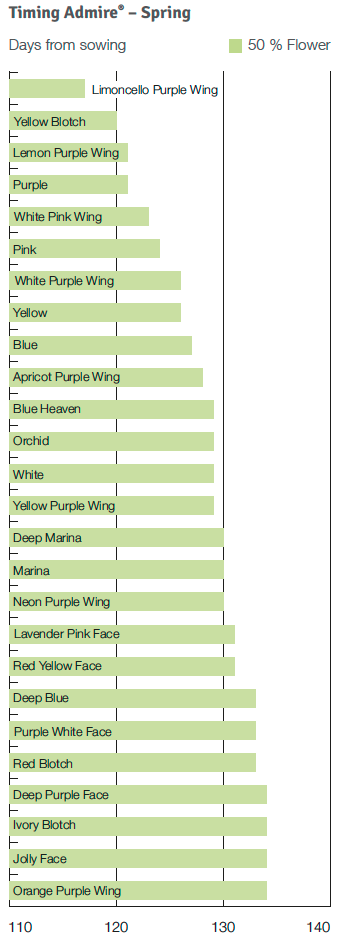
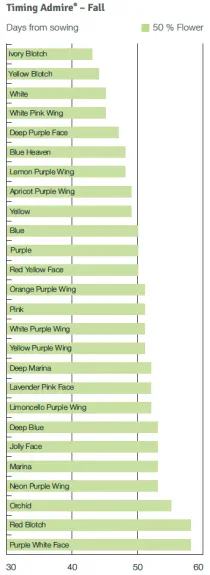
Expert Tip
Admire® impresses with an early, consistent pack and pot performance. Adjust the PGR rates and application frequency based on local conditions. There is no "one-fits-all" recipe as cultivation depends on location, climate, season and environmental conditions. Testing is mandatory!
Moisture Codes
| Saturated (5) | Water is easily observed when finger is pressed on cell. Water moves freely from the top of the plug to the bottom. |
| Wet (4) | Media looks black and is not glistening. The media feels wet to the touch but there is very little water movement. |
| Moist (3) | Water is not easily visible. When finger is pressed on the cell there is very little movement from top to bottom. |
| Medium (2) | Media is not black, but now looks medium brown. There is no water movement when pressed with finger. |
| Dry (1) | Media has changed color to a very light brown and is dry to the touch. |
All information in our technical guide is based on our own trials and would therefore be as guideline only. Detailed cultivation aspects vary depending on climate, location, time of year and environmental conditions. Benary expressly disclaims any responsibility for the content of such data/information and makes no representation or warranty for the cultivation of any products listed. It is recommended that growers conduct a trial of products under their own conditions.