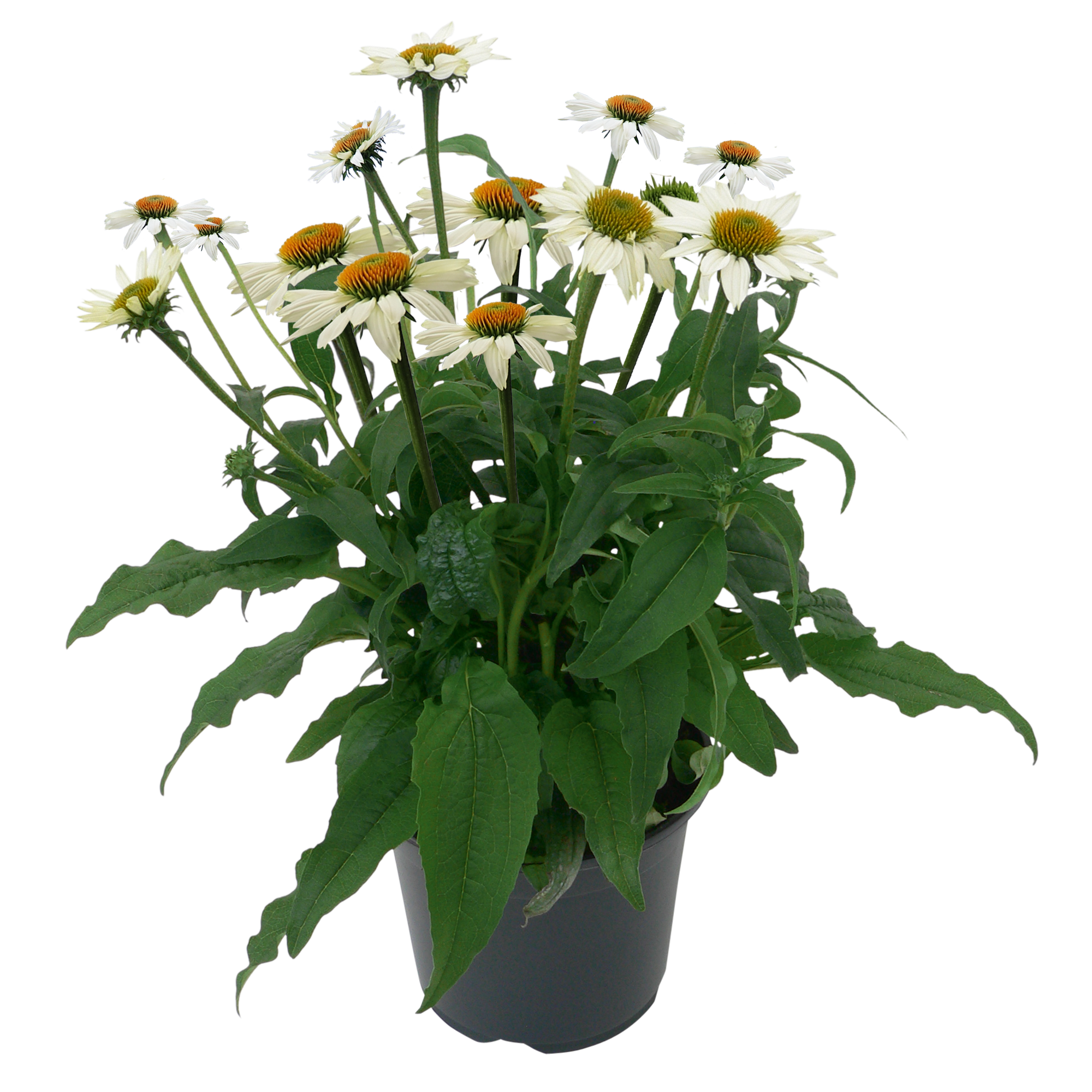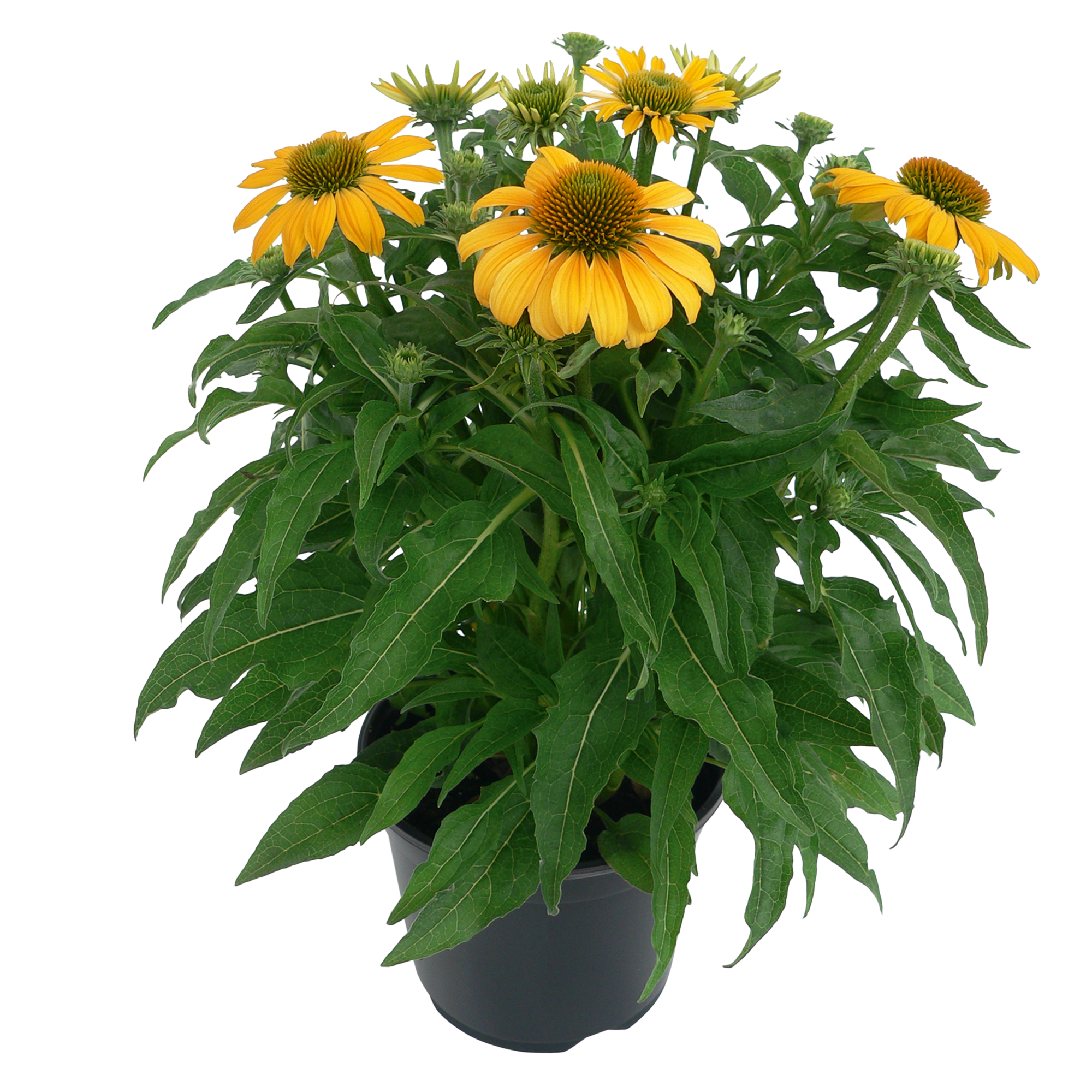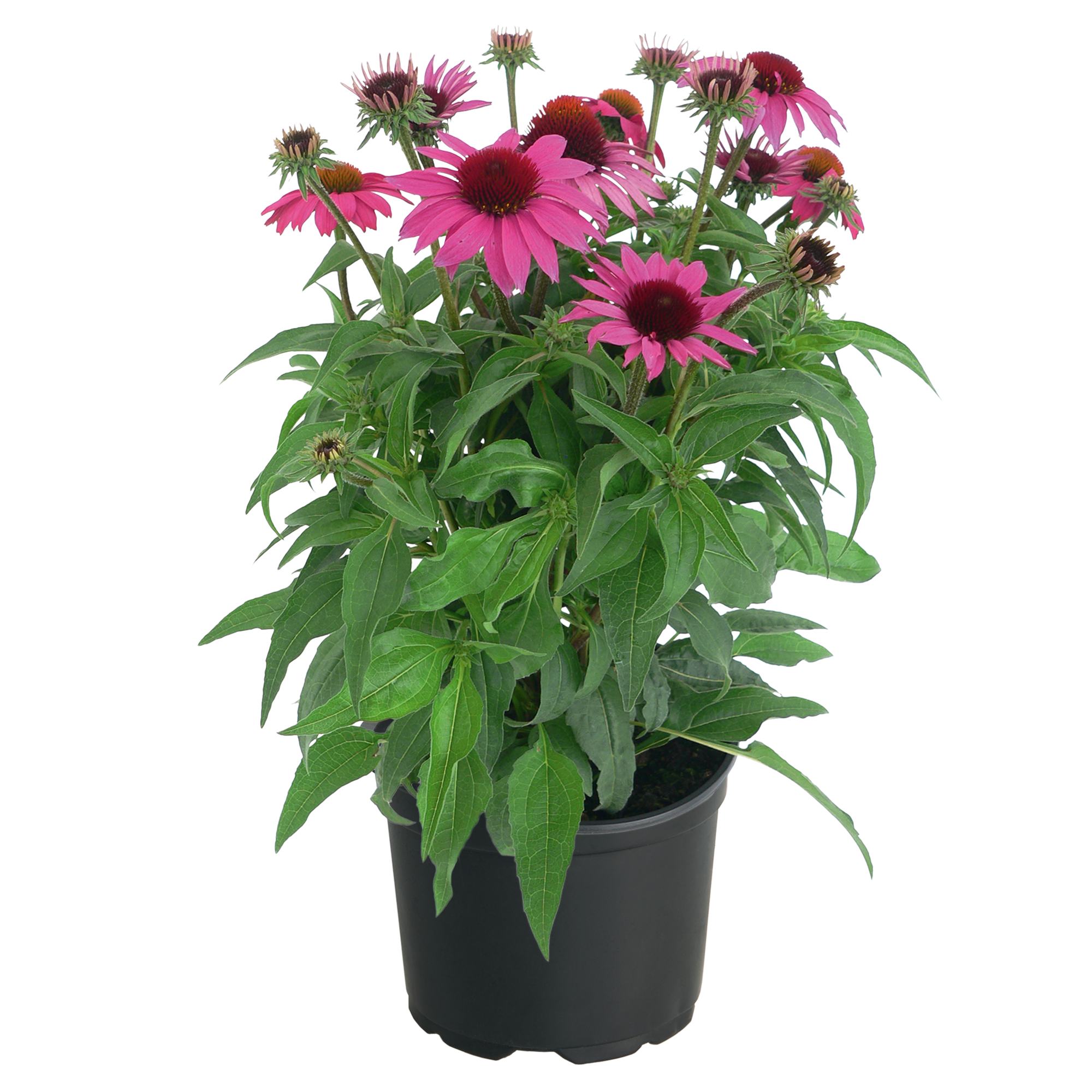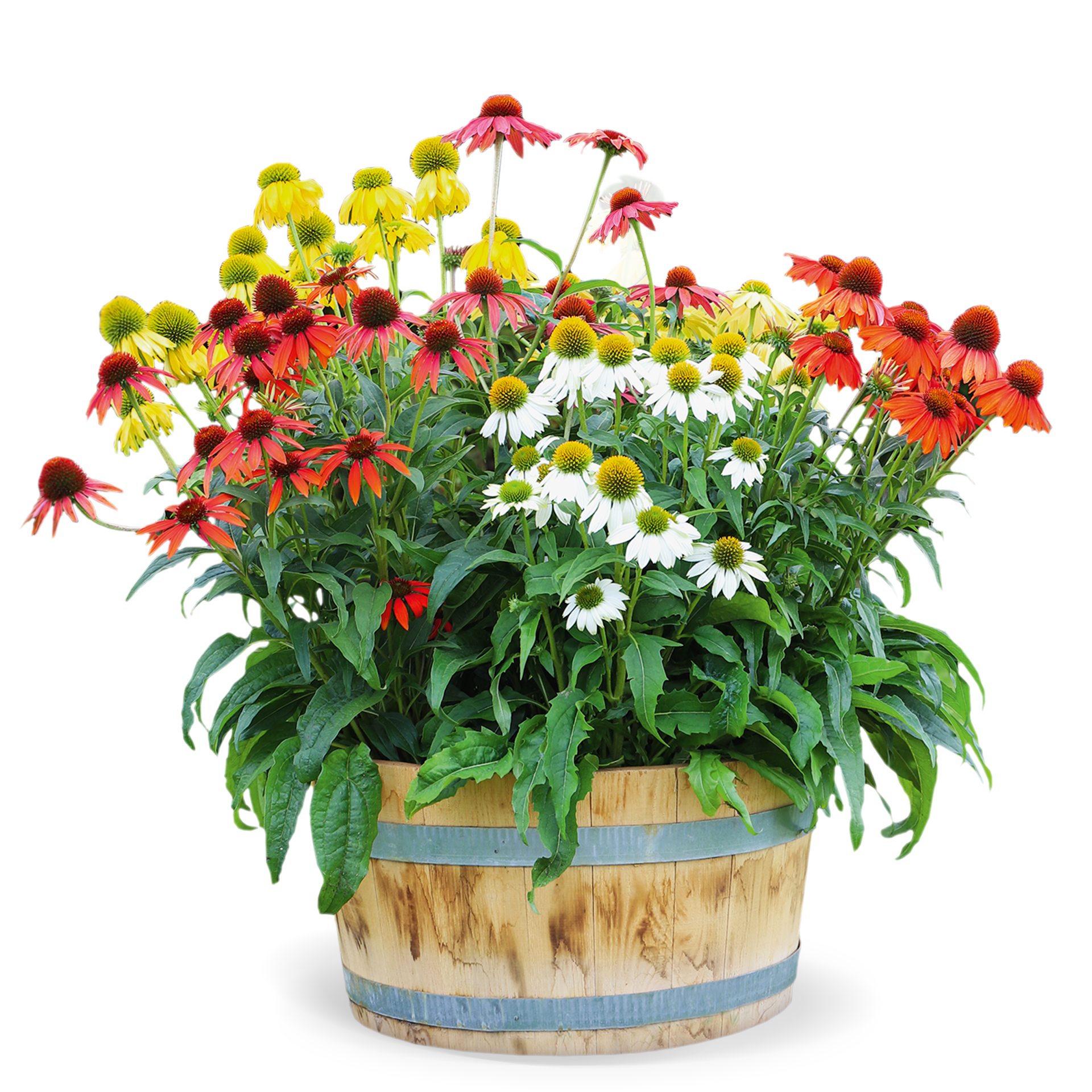
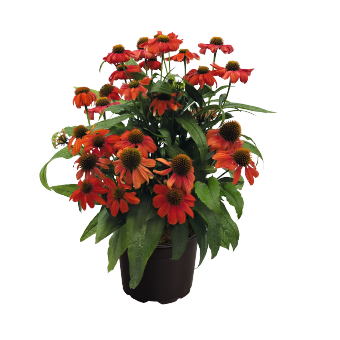
PollyNation™ Orange Red
Item no.: EP2103TLarge Flowers with Striking Colors
- FastraX perennial: First year flowering Echinacea from seed
- Well-branched plant habit
- Perfect patio and garden plant with excellent heat and drought tolerance
- Suitable for premium pot production
- Optimal storage: up to 6 months at 5 °C / 41 °F
- Crop Time
- Spring: 20 - 24 weeks
- Height ∅
- 26 ″ / 65 cm
- Width ∅
- 14 ″ / 35 cm
- Exposure
- Sun
- Seed Form
- ApeX
- Heat Zone
- 9-1
- Hardiness Zone
- 4-9
- Product Use
- Pots, Containers, Bedding, Landscape
- Family, Origin
- Asteraceae, North America
- Minimum Germ. Rate
- 80 %
Technical Guide
Flowering Type: FastraX perennial – first year flowering plants without vernalization. Facultative long day plant. Long days with higher light intensity result in faster flowering.
Flowering Mechanism: Flowering is affected by day length. A day length >10 hours will result in flower initiation and >13 hours will have the fastest flowering. High light intensity and warmer temperatures shorten the total crop time.
Germination: Maintain optimal conditions for seedling development, should begin on the day of sowing until radicle emergence. Expect the emergence of the first seedlings after 5-10 days.
Cover: Cover the seeds with a thin layer of soil or vermiculite.
Sowing method: 1 seed per plug. 3 seeds per plug for big plugs.
Media: pH 5.5-5.8; EC 0.7. Raise to EC 1.2-1.5 from stage 3.
Temperature: Maintain 22-24 °C (72-76 °F) for the first 10 days. For irrigation use warm water above 18 °C (64 °F) only. Afterwards, ensure a temperature of 20-22 °C (68-72 °F) during night and day. When the roots reach the bottom of the cell, the temperature can be lowered to 16-18 °C (60-64 °F).
Moisture: Begin with the moisture level wet (4) for the first 10 days or until radicle emergence has occurred. Afterwards, begin to dry them back and alternate between a wet (4) and a medium (2). Constantly wet soil during overwinter production can lead to root rot and uneven plant development.
Humidity: 95-100% until day 10; then reduce to 40-60 %. Provide proper ventilation and horizontal airflow to improve oxygen levels in the media.
Light: Light is not required for germination. Providing 1,500-2,000 ft. candles (15,000-20,000 lx) in stage 2 will reduce stretching and improve the seedling quality and uniformity. Increase the light levels up to 3,000 ft. candles (30,000 lx) before transplanting. Always protect seedlings from direct sunlight.
Fertilizer: Begin fertilizing early to improve seedling quality. Initial feeding should start at 100 ppm nitrogen and gradually work up to 175-225 ppm when seedlings are established. Use a complete balanced fertilizer (15-5-15).
Plug Bulking and Flower Initiation: Optimum conditions during the vegetative stage from cotyledon expansion to flower initiation. This stage is when the seedlings root to the edge of the plug and reach the 4-6 true leaf stage where flower initiation occurs.
Growth Regulators: No growth regulators should be necessary during plug production since growth can be controlled by temperature and moisture management. If seedlings are uneven, a very light application of B-Nine (daminozide) can be applied two to three times.
Fungicides: Apply fungicides during long periods of low light and high humidity, pay special attention to this during the youngplant stage.
Media: pH 5.8-6.2; EC 1.5-2.0
Light: The longer the day length and the higher the light intensity, the earlier the flowering. >10 hours with high light intensity of 3,500-4,000 ft. candles (35,000-40,000 lx) or >12 hours with lower light intensity of 1,500-2,000 ft. candles (15,000-20,000 lx) will result in flowering plants.
Temperature: After transplanting, always maintain temperatures of 16-18 °C (60-64 °F) during days, 14-16 °C (57-60 °F) during nights throughout the entire production. The lower night temperature encourage basal branching and compactness for a higher quality plant. Avoid cool temperatures below 12 °C (54 °F) after transplanting to avoid red leaves and uneven growth. Always protect the plants from frost.
Moisture: Echinacea prefers warm and rather dry conditions. Alternate between moisture levels moist (3) and medium (2). Let plants dry back before re-saturating to a moist (3). Constantly wet soil, especially during overwinter production, can lead to root rot, other diseases and uneven plant development.
Humidity: 40-60 % humidity is ideal. Providing good ventilation and horizontal airflow will help lower the humidity and dry back the media, providing oxygen to the roots.
Fertilizer: Rather high fertilization levels are required. Feed the plants regulary with 175-225 ppm nitrogen, starting with a nitrogen-based fertilizer (25-8-16). Later on, under higher light conditions in the late spring and summer, a complete balanced fertilizer should be used (20-10-20). During overwinter production, use a fertilizer high in potassium (16-5-25) due to cool temperatures.
Growth Regulators: With proper moisture and temperature management, there should not be a need for growth regulators. If required, multiple sprays of Cycocel (chlormequat chloride) at 500-750 ppm per spray or B-Nine (daminozide) sprays at 2,500 ppm can be applied. The growth of the varieties should be taken into account, as “Orange Red” is the most vigorous and “Magenta” is the most compact color. Pinching the plants is not necessary.
Fungicides: Apply fungicides during long periods of low light and high humidity.
Common Diseases: Botrytis, powdery mildew, root rot.
Plug Crop Time
288 tray (1*): 5-6 weeks
128 tray (1*): 7-8 weeks
72 tray (3*) – big plug for overwintering: 11-13 weeks
Finished Crop Time (from 288 tray)
Annual production
Spring: 18-22 weeks
Summer: 14-18 weeks
Overwintering production: 32-36 weeks
12-15 cm (5-6") pots: 1 plant per pot
17-19 cm (7-8") pots: 2-3 plants per pot
*seeds per plug
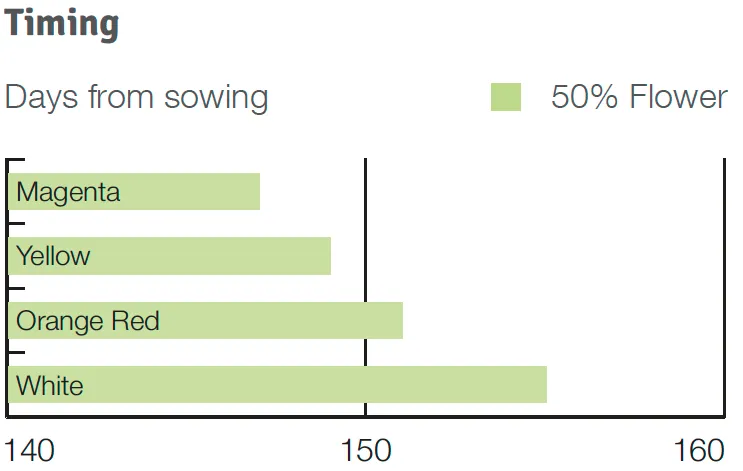
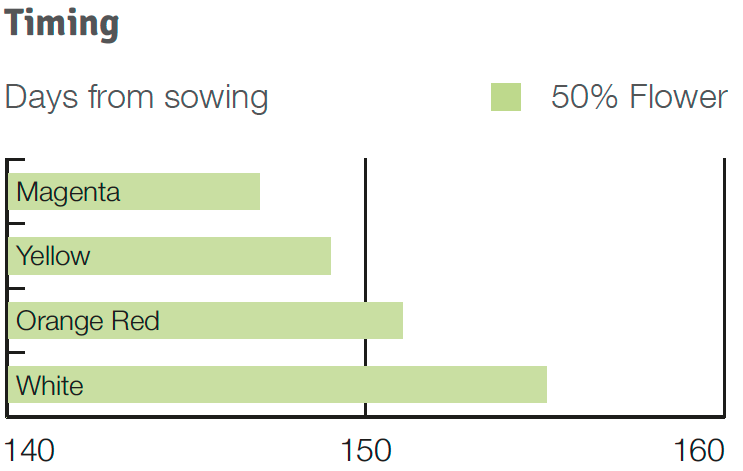
Expert Tip
Overwintering and annual production are possible.
Moisture Codes
| Saturated (5) | Water is easily observed when finger is pressed on cell. Water moves freely from the top of the plug to the bottom. |
| Wet (4) | Media looks black and is not glistening. The media feels wet to the touch but there is very little water movement. |
| Moist (3) | Water is not easily visible. When finger is pressed on the cell there is very little movement from top to bottom. |
| Medium (2) | Media is not black, but now looks medium brown. There is no water movement when pressed with finger. |
| Dry (1) | Media has changed color to a very light brown and is dry to the touch. |
All information in our technical guide is based on our own trials and would therefore be as guideline only. Detailed cultivation aspects vary depending on climate, location, time of year and environmental conditions. Benary expressly disclaims any responsibility for the content of such data/information and makes no representation or warranty for the cultivation of any products listed. It is recommended that growers conduct a trial of products under their own conditions.