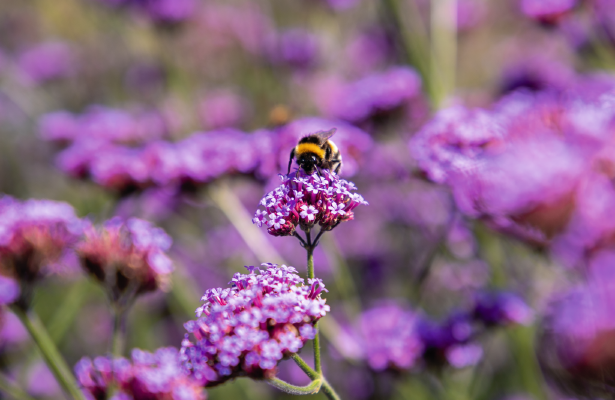
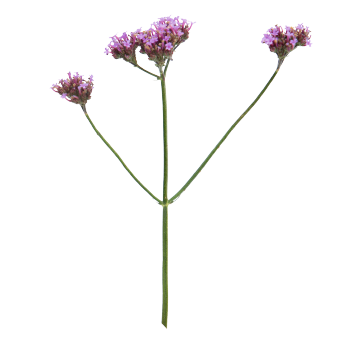
Vanity
Item no.: VB0201TAttracts Many Beneficial Insects
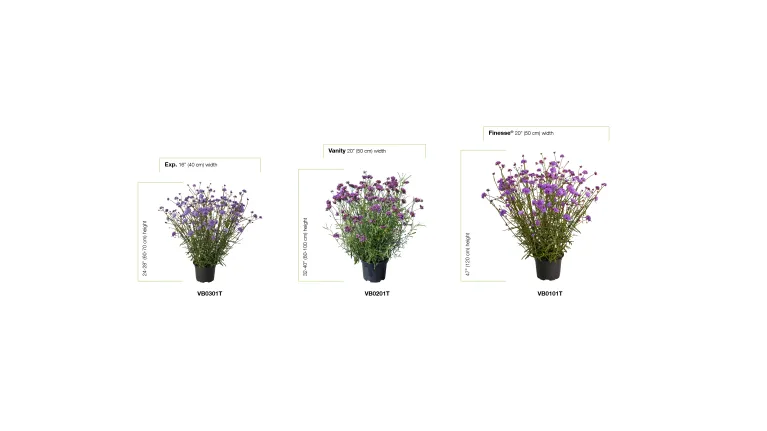
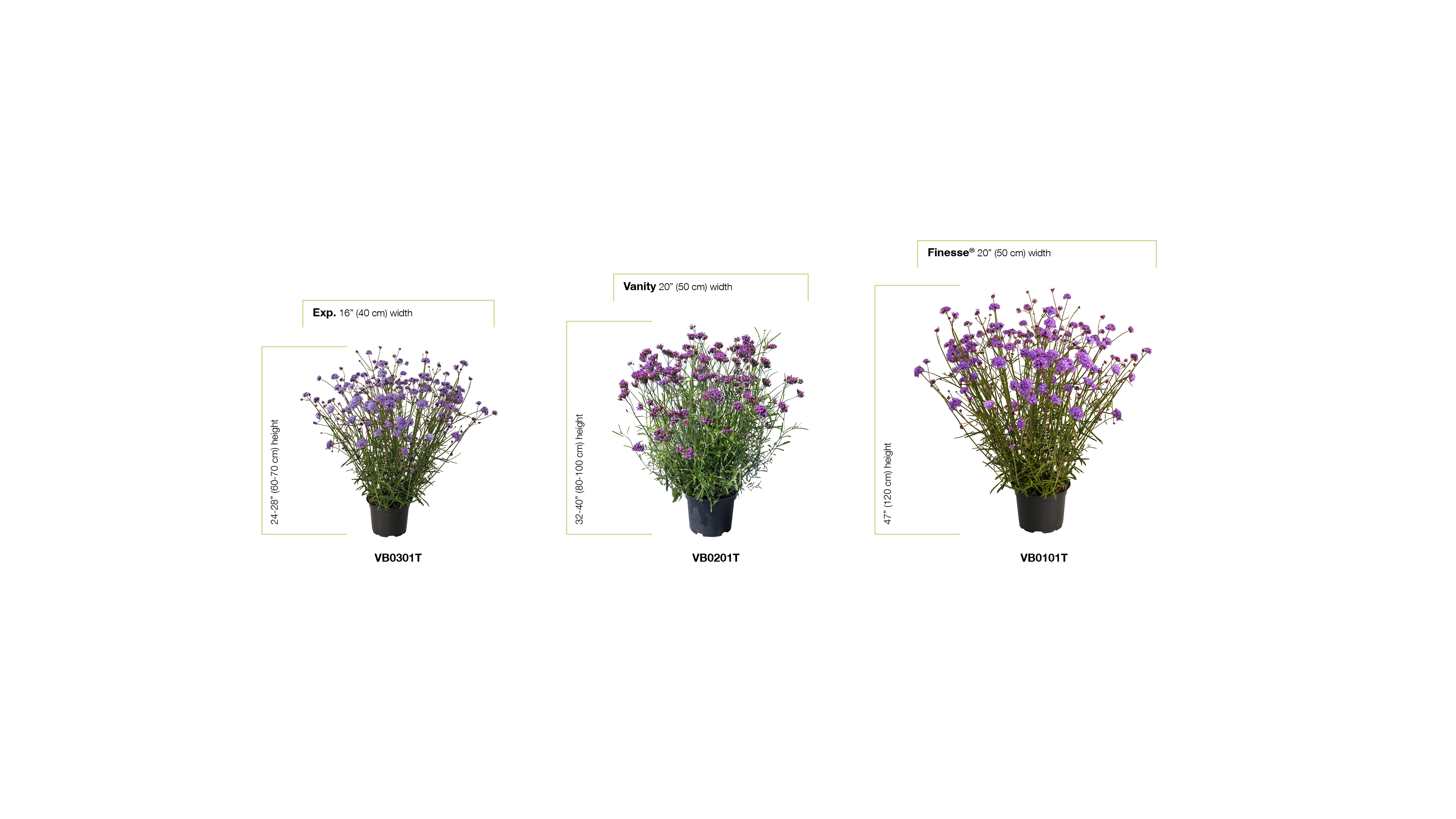
- Compact sister of Finesse®
- Long flowering season until frost
- Suitable for borders, containers and landscaping
- Well-branched, rain and heat tolerant plants
- Optimal storage: up to 6 months at 5 °C / 41 °F



- Crop Time
- Spring: 12 - 14 weeks
- Height ∅
- 35 ″ / 90 cm
- Width ∅
- 20 ″ / 50 cm
- Exposure
- Sun - Partial shade
- Seed Form
- ApeX
- Product Use
- Borders, Cutflower, Containers, Landscape
- Family, Origin
- Verbenaceae, South America
- Minimum Germ. Rate
- 85%
Technical Guide
Flowering Type: Facultative long day plant, flowering more quickly under a long day length.
Flowering Mechanism: Typical cultivation as a flowering annual that flowers from June to late october. Higher light intensity will decrease the number of days to flower. Alternatively cultivation as herbaceous perennial plant is common.
Germination: Maintain optimal conditions for seedling development, should begin on the day of sowing until root emergence. Expect the emergence of the first seedlings after 14 days. If the germination rate at that moment is low, a cool period is advisable: Bring down the temperature to 10-15 °C (50-59 °F) during the next 7 days. Afterwards, bring temperature back to 20-22 °C (68-72 °F) during the day and 15-18 °C (58-64 °F) during the night for another 14 days.
Cover: Cover the seeds thinly with vermiculite.
Sowing method: 3-5 seeds per plug for 12-18 cm (5-7”) pots, 1-2 seeds per plug for 9-12 cm (4-5”) pots, direct sowing is also possible.
Media: Use a well-drained, pre-fertilized growing substrate with 20-30 % clay.
Temperature: During the day 20-22 °C (68-72 °F) is optimum, during the night you should lower the temperature to 15-18 °C (58-64 °F).
Moisture: After sowing keep the soil slightly moist but not wet.
Humidity: Avoid a high humidity.
Plug Bulking and Flower Initiation: Maintain optimal conditions during the vegetative stage from cotyledon expansion to flower initiation. This stage is when the seedlings root to the edge of the plug and reach the 4-6 true leaf stage where flower initiation occurs. Vernalization is not required for flower initiation.
Light: Grow at full sunlight to develop the intense flower colour.
Temperature: The seedlings should be grown at an average temperature of 18 °C (64 °F).
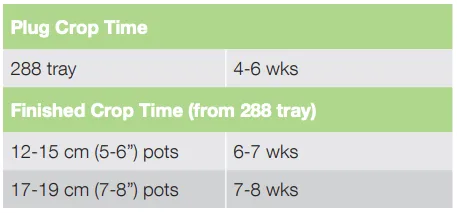
Transplant Ready: Transplant the plugs from a spring sowing after 6-8 weeks in their final container – either in an optimally 12-18 cm (5-7”) pot or in smaller 9-12 cm (4-5”) pots to sell the green plants for landscaping. For this purpose 1-2 seeds per plug is sufficient.
Media: Well-drained soil, pH 5.8-6.2; E.C. 1.2- 1.5. In field Verbena likes a humus, sandy-loamy soil with good drainage.
Light: Grow at full sunlight to develop the intense flower color.
Temperature: During the day around 18 °C (64 °F) is optimum, during the night you should lower the temperature to 14-16 °C (57-60 °F). Verbena does not tolerate frost.
Moisture: Well-drained soil, regular moisture.
Humidity: Avoid a high humidity during the finishing.
Fertilizer: Verbena requires a high fertilization level with a weekly dose of nitrogen. Also a good potassium level is important. But avoid high ammonium or nitrogen levels during the growing.
Growth Regulator: Pinching or the use of PGR is possible but not necessary. The genetics of the crop are responsible for the compact plant habit, even if no regulators are used.
Common Diseases: Stagnant moisture leads to root rot, powdery mildew.
Pests: Primarily aphids, thrips and snails.
Post Harvest: Fertilize with potassium nitrate 1-2 weeks prior to shipping.
Expert Tip
Pay attention to the irrigation, stagnant moisture with root rot as a result is the worst case for Verbena. So the well-drained soil is an important factor during cultivation.
– Amelie, Product Manager
Moisture Codes
| Saturated (5) | Water is easily observed when finger is pressed on cell. Water moves freely from the top of the plug to the bottom. |
| Wet (4) | Media looks black and is not glistening. The media feels wet to the touch but there is very little water movement. |
| Moist (3) | Water is not easily visible. When finger is pressed on the cell there is very little movement from top to bottom. |
| Medium (2) | Media is not black, but now looks medium brown. There is no water movement when pressed with finger. |
| Dry (1) | Media has changed color to a very light brown and is dry to the touch. |
All information in our technical guide is based on our own trials and would therefore be as guideline only. Detailed cultivation aspects vary depending on climate, location, time of year and environmental conditions. Benary expressly disclaims any responsibility for the content of such data/information and makes no representation or warranty for the cultivation of any products listed. It is recommended that growers conduct a trial of products under their own conditions.