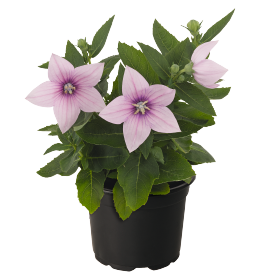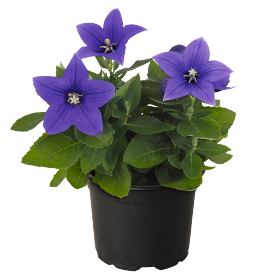
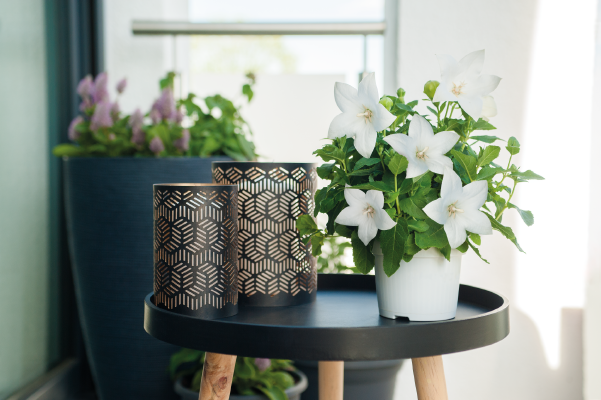
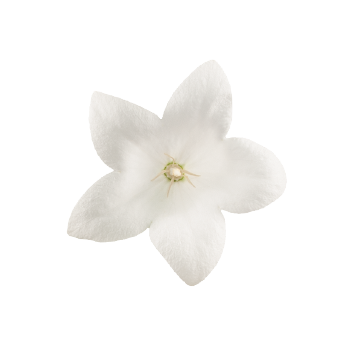
Pop Star White
Item no.: PG0103RA Pop Star is born!
- FastraX perennial: First year flowering without vernalization
- Most compact and well-branched habit on market
- Tight flowering window
- Low requirement of PGR application – less chemicals, more sustainable, cost and time saving
- Use as indoor and outdoor plant
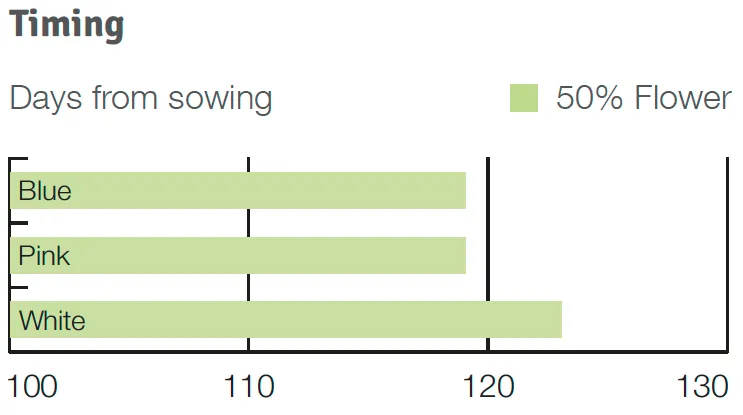
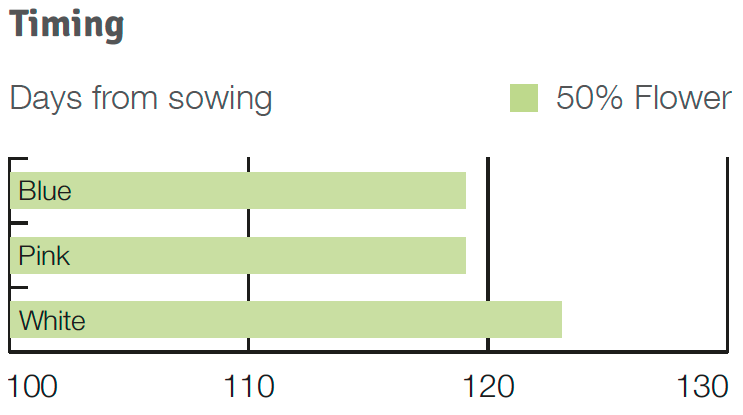
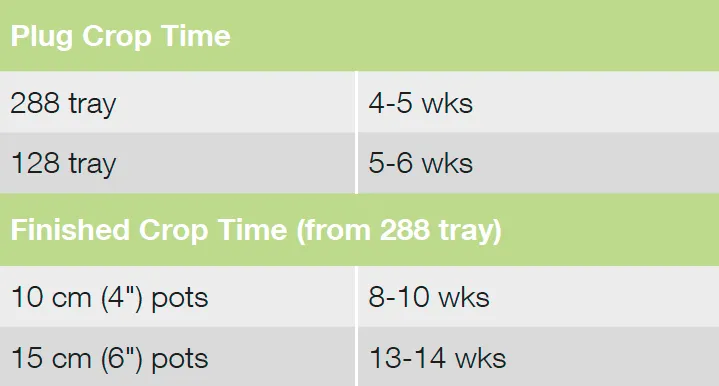
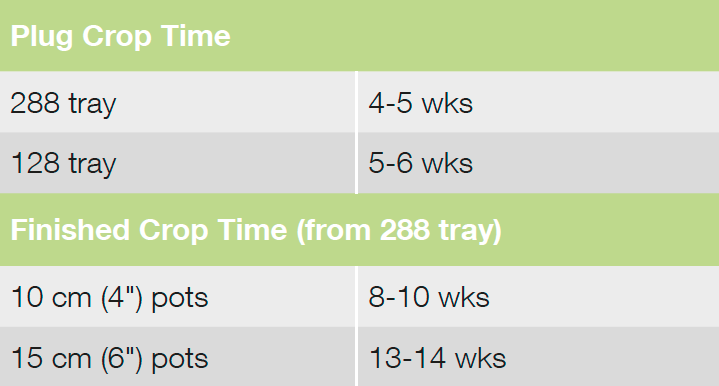
- Crop Time
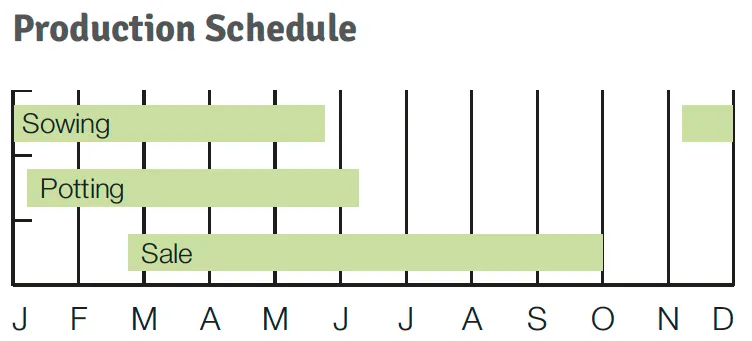
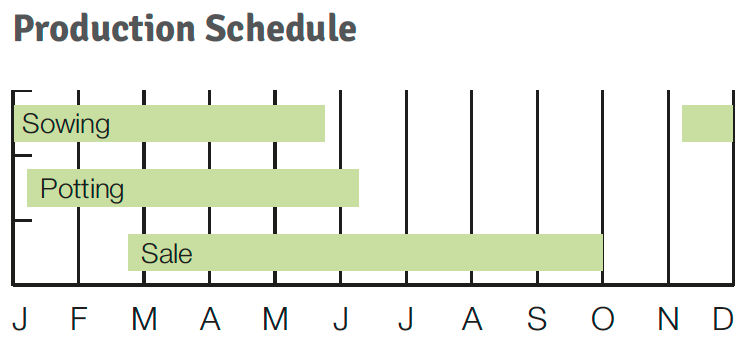
- Spring: 13 - 15 weeks
- Height ∅
- 7 ″ / 18 cm
- Width ∅
- 7 ″ / 18 cm
- Exposure
- Sun - Partial shade
- Seed Form
- Raw Seed
- Heat Zone
- 9-1
- Hardiness Zone
- 3b-9b
- Product Use
- Pots, Mixed Containers
- Family, Origin
- Campanulaceae, Eastern Asia
- Minimum Germ. Rate
- 90 %
Technical Guide
Flowering Type: FastraX perennial – first year flowering plants without vernalization. Day-neutral plant platycodon flower regardless of the day length, but providing long days and high irradiance greatly affects earlier flowering.
Flowering Mechanism: High light intensity and warmer temperatures will shorten the time to flower. Supplemental lighting during germination will benefit but is not necessary. Higher light levels build stronger plants. Young seedlings need to be protected from high light levels until they are well established.
Germination: Optimal conditions for seedling development, beginning on the day of sowing until radical emergence. Expect radicle emergence in 3-4 days.
Cover: No covering is necessary.
Sowing method: For 10,5 cm (4") pot 1 seed per plug; For 12 cm (5") pot 4 seeds per plug.
Media: pH 5.5-6.0; EC 1.0 <; 0.5-0.75.
Temperature: 20-21 °C (68-70 °F), after germination has occurred the temperature can be reduced slightly to 18-20 °C (64-68 °F).
Moisture: Begin with saturated (5) media for the first 4 days. On day 5 begin to reduce the moisture level to wet (4) for the next 4‑5 days. Once the cotyledons have expanded reduce further to moist (3). This should occur on day 11‑12. Begin to alternate between a moisture level wet (4) and a Medium (2). Let the media approach medium (2) before re‑saturating to wet (4).
Humidity: 95‑100 % until day 6; then reduce to 40‑60 %. Provide proper ventilation and horizontal airflow to improve oxygen levels in the media. Light: Light is necessary for germination. If utilizing a germination chamber, provide light levels of 10‑100 ft. candles, (100‑1,000 lx). Providing light during germination will benefit and improve quality. Protect seedlings from direct sun light by shading.
Fertilizer: Maintain an EC < 1.0; Fertilized water should not exceed an EC of 0.5. Begin fertilizing early using a calcium‑based feed, 14‑4‑14 or 15‑5‑15 at 50‑60 ppm.
Plug Bulking and Flower Initiation: Optimum conditions during the vegetative stage from cotyledon expansion to flower initiation. This stage is when the seedling roots to the edge of the plug.
Media: pH 5.5‑6.0; EC 0.75‑1.0.
Light: As the seedlings become well established they can be given higher light levels of 6‑10 mol/ m2/day (2,000‑3,000 ft. candles or 20,000‑ 30,000 lx). Continue to protect seedlings from direct sunlight.
Temperature: 18‑20 °C (64‑68 °F).
Moisture: Alternate between moisture levels wet (4) and Medium (2). Allow the media to approach medium (2) before re-saturating to wet (4). Platycodon prefer slightly drier media conditions for good root development.
Fertilizer: Begin fertilizing at 100-150 ppm using calcium-based fertilizers 14-4-14; 15-5-15; 17-5-17 and 20-10-20 under high light conditions.
Growth Regulators: If needed apply a B-Nine (daminozide) spray at 750-1,000 ppm to keep seedlings from stretching. Avoid higher rates of B-Nine since leaf edge burn may occur.
Media: pH 5.5-6.0; EC 1.0-1.5.
Light: Provide light levels of 12-14 mol/m2/day (3,500-4,000 ft. candles or 35,000-40,000 lx). Once plants are established providing long days of 16 hrs. and light levels of 16-18 mol/m2/day (4,500-5,000 ft. candles or 45,000-5,000 lx) for 3 weeks will shorten crop time and produce strong plants.
Temperature: 18-20 °C (64-68 °F) nights, 21-23 °C (70-73 °F) days for the first two weeks after transplanting. Thereafter temperatures may be lowered to 16-18 °C ( 60-64 °F) day and night. An ADT (average daily temperature) of 19 °C (66 °F) will give the fastest finished crop.
Moisture: Alternate between moisture levels wet (4) and medium (2). Allow the media to reach medium (2) before re-saturating to wet (4). Allowing the media moisture level to dry back will encourage good root development.
Humidity: 40-60 % humidity is ideal. Providing good ventilation and horizontal airflow will help lower the humidity and dry back the media, providing oxygen to the roots.
Fertilizer: Higher rates of ammonium can now be used in the feed program. Fertilize at 150-200 ppm N using a 17-5-17 or 20-10-20 fertilizer. Under high light conditions 20-10-20 can be used.
Growth Regulators: B-Nine (daminozide) sprays at 1,000 ppm can be made as needed two weeks after transplanting. Higher rates may cause leaf edge burn.
Fungicide: Apply fungicides during long periods of low light and high humidity.
Common Diseases: Botrytis.
Pests: Primarily aphids and thrips.
Post Harvest: Fertilize with potassium nitrate at 100 ppm 1-2 weeks prior to shipping.
Expert Tip
If using B-Nine (daminozide) sprays do not apply more than 1,000 ppm. Higher rates can cause leaf edge burn. Plants may also be too compact with a smaller flower.
Moisture Codes
| Saturated (5) | Water is easily observed when finger is pressed on cell. Water moves freely from the top of the plug to the bottom. |
| Wet (4) | Media looks black and is not glistening. The media feels wet to the touch but there is very little water movement. |
| Moist (3) | Water is not easily visible. When finger is pressed on the cell there is very little movement from top to bottom. |
| Medium (2) | Media is not black, but now looks medium brown. There is no water movement when pressed with finger. |
| Dry (1) | Media has changed color to a very light brown and is dry to the touch. |
All information in our technical guide is based on our own trials and would therefore be as guideline only. Detailed cultivation aspects vary depending on climate, location, time of year and environmental conditions. Benary expressly disclaims any responsibility for the content of such data/information and makes no representation or warranty for the cultivation of any products listed. It is recommended that growers conduct a trial of products under their own conditions.