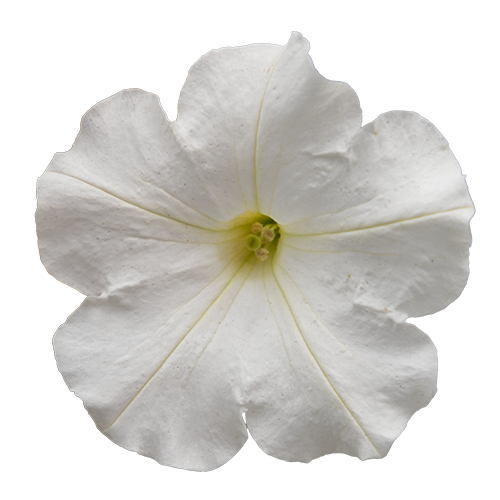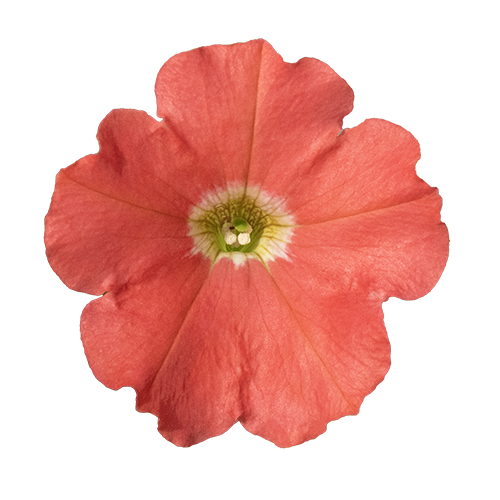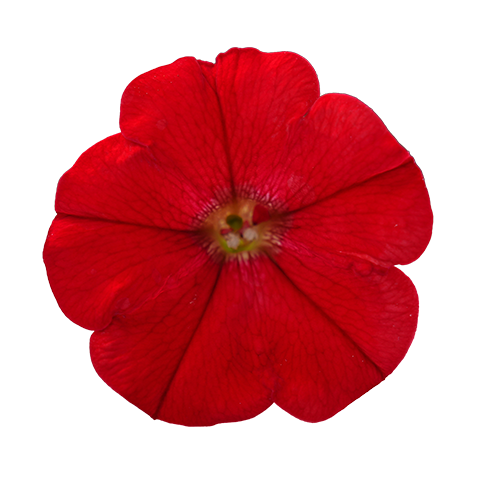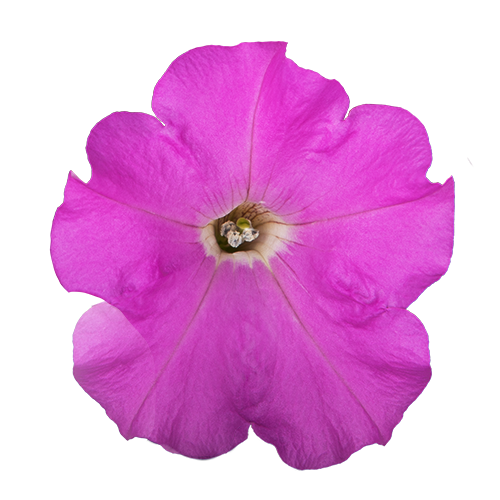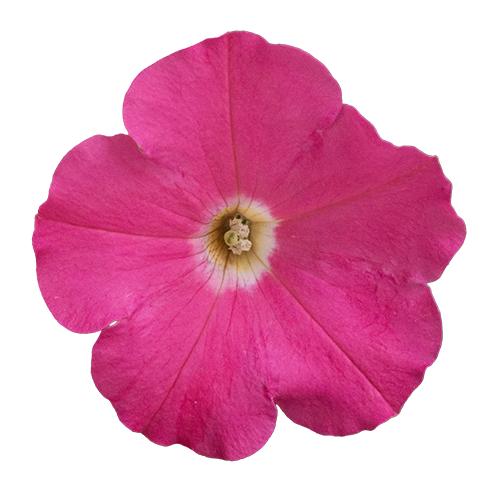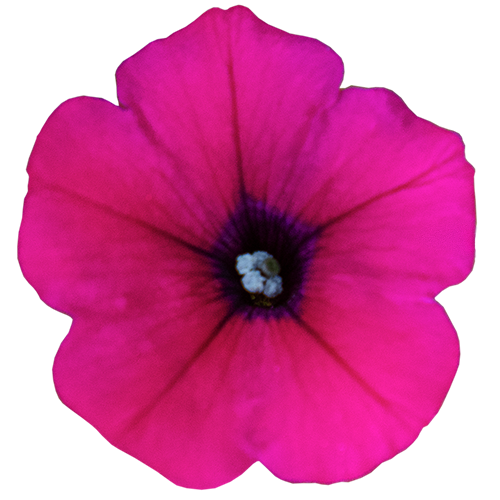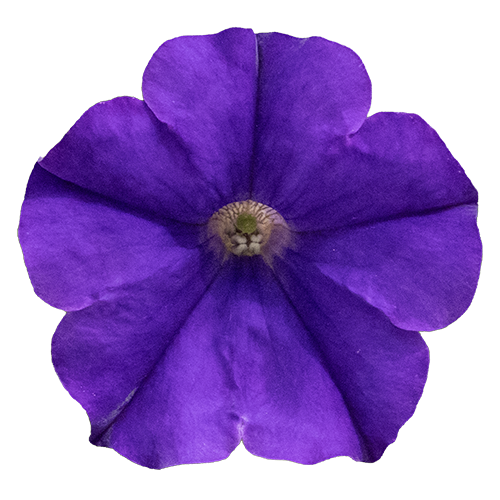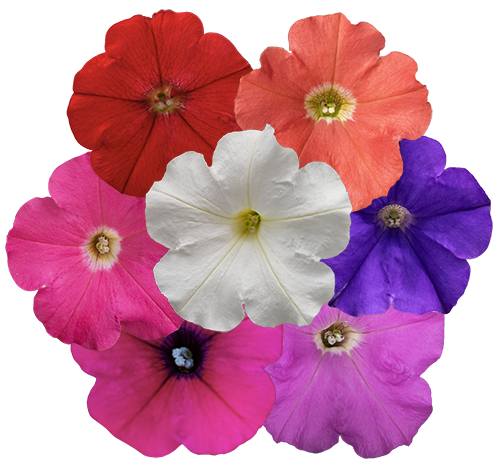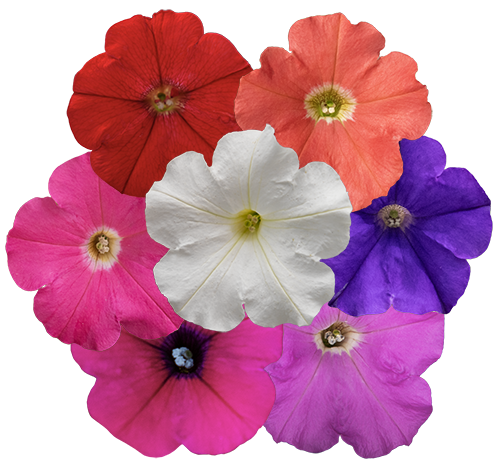

BOOM!™ TR
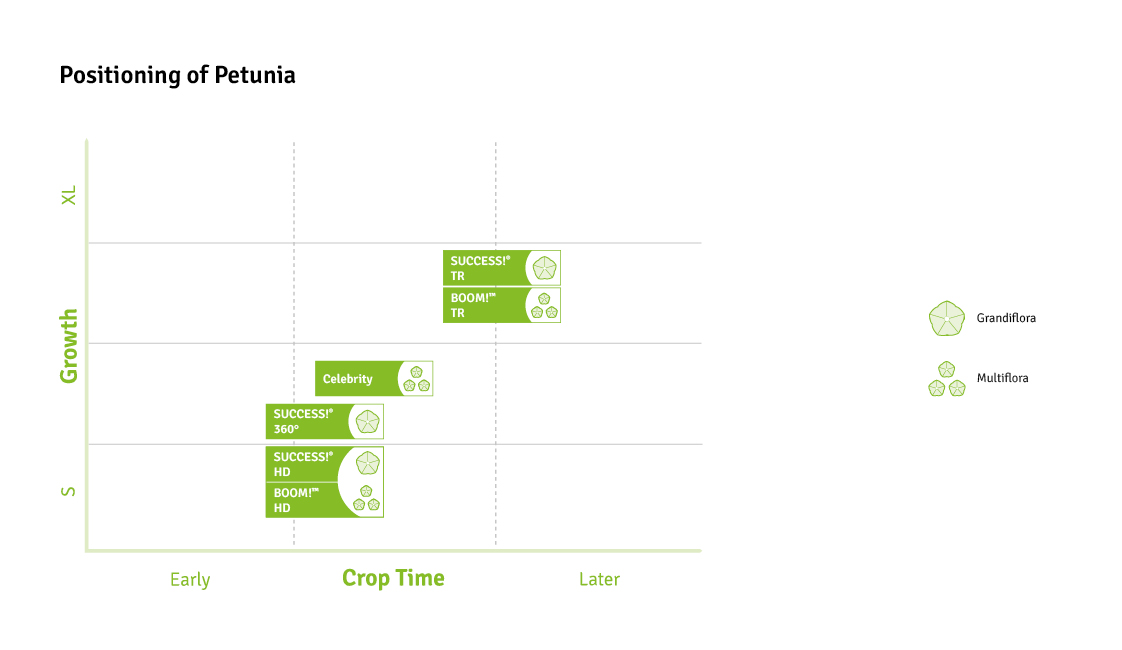
Trailing Multiflora Petunia
- Free-flowering Petunia series for baskets
- High-impact, small-flowered plants
- Excellent weather resistance
- The Benary Petunia pellets require more water than usual to dissolve; this is crucial to ensure rapid and uniform germination.
- Crop Time
- Spring: 11 - 13 weeks
- Height ∅
- 11 ″ / 28 cm
- Width ∅
- 22 ″ / 55 cm
- Exposure
- Sun - Partial shade
- Seed Form
- Pelleted Seed
- Product Use
- Pots, Hanging Baskets, Mixed Containers, Landscape
- Family, Origin
- Solanaceae, South America
- Minimum Germ. Rate
- 90 %
Technical Guide
Flowering Type: Facultative long day plants. Long days and high irradiance will promote flowering.
Flowering Mechanism: Flowering is affected by day length, irradiance and temperature.
Germination: Maintain optimal conditions for seedling development, should begin on the day of sowing until root emergence. Expect root emergence in 3-5 days.
Cover: No covering is necessary.
Sowing method: 1 seed/pellet per plug.
Media: pH 5.5-5.8; keeping the pH below 6.0 will help to keep boron and iron available. EC <1.0 or 0.75-1.0.
Temperature: Maintain 22-24 °C (72-76 °F) until root emergence and then reduce to 20-21 °C (68-70 °F). The temperature can be lowered on approximately day 5. Once cotyledons have expanded lower temperature further to 18-20 °C (64-68 °F).
Moisture: Begin by watering to a saturated (5); applying enough water to help dissolve the pellets. After sowing do not allow the pellets to dry back before moving to the germination chamber or benches. Maintain a saturated (5) for 3-4 days or until radicle emergence. On day 5 reduce media moisture to a wet (4) for the next 5-6 days and on day 10-11 reduce further to a medium (2). Alternate between a wet (4) and a medium (2) between watering.
Humidity: Maintain 95-100 % until day 5; then reduce to 40-60 %. Provide proper ventilation and horizontal airflow to improve oxygen levels in the media.
Light: Light is necessary for germination. If using a germination chamber provide 10-100 ft. candles (100-1,000 lx).
Fertilizer: Maintain an EC < 1.0
Plug Bulking and Flower Initiation: Maintain optimal conditions during the vegetative stage from cotyledon expansion to flower initiation. When the seedlings root to the edge of the plug and reach the 3-6 true leaf stage, flower initiation will occur.
Media: pH 5.5-5.8; EC 1.25-1.5.
Light: Petunias need long days to flower. To initiate buds under short days extend day length to 13.5-14 hrs. Under long day, low light conditions, supplemental lighting of 350-500 ft. candles (3,500-5,000 lx) may be necessary.
Temperature: Maintain 18-20 °C (64-68 °F) until day 26-28, then reduce the temperature to 15.5-18 °C (60-64 °F). Keep temperatures > 16 °C (60 °F ) until ready to transplant. For the fastest finish maintain an ADT of 19.5 °C (67 °F). With these temperatures some additional growth regulators will need to be applied.
Moisture: On approximately day 12 start to alternate between a wet (4) and a medium (2) between watering. Allow the moisture level to approach a medium (2) before re-saturating to a wet (4).
Fertilizer: Upon initial germination approximately days 5-7 begin feeding with 50 ppm nitrogen. Pay attention to the addition of boron since low boron can cause tip abortion. Ideal boron concentration is 0.5 ppm. Fertilize established seedlings at 100-150 ppm nitrogen. Under high light conditions, apply an ammonium based feed (17-5-17). Under low light conditions, apply a calcium based feed (14-4-14). Under high light and long or extended days, an ammonium based feed (20-10-20) is preferred. For more shoot growth, add an additional ammonium treatment to the schedule. To prevent stretching under low light and cool temperatures, reduce ammonium and apply only calcium based fertilizer.
Growth Regulators: Petunias are very responsive to B-Nine (daminozide) sprays in the early tages. Apply the first application early on day 14 as a spray at 2,500 ppm. B-Nine can be used as the main growth regulator up until bud-set. Later applications can be used as a spray at 2,500-5,000 ppm. If applied too many times or when buds are visible it can cause smaller and even distorted flowers. Bonzi or Piccolo (paclobutrazol) spays can also be used effectively. In the early stages rates vary depending on temperature and light. These rates are between 3-5 ppm. A DIF of (3 °C) can also be used effectively to control growth.
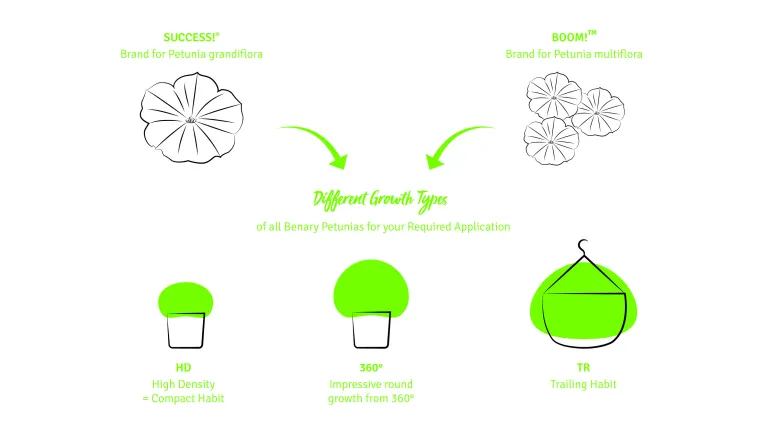
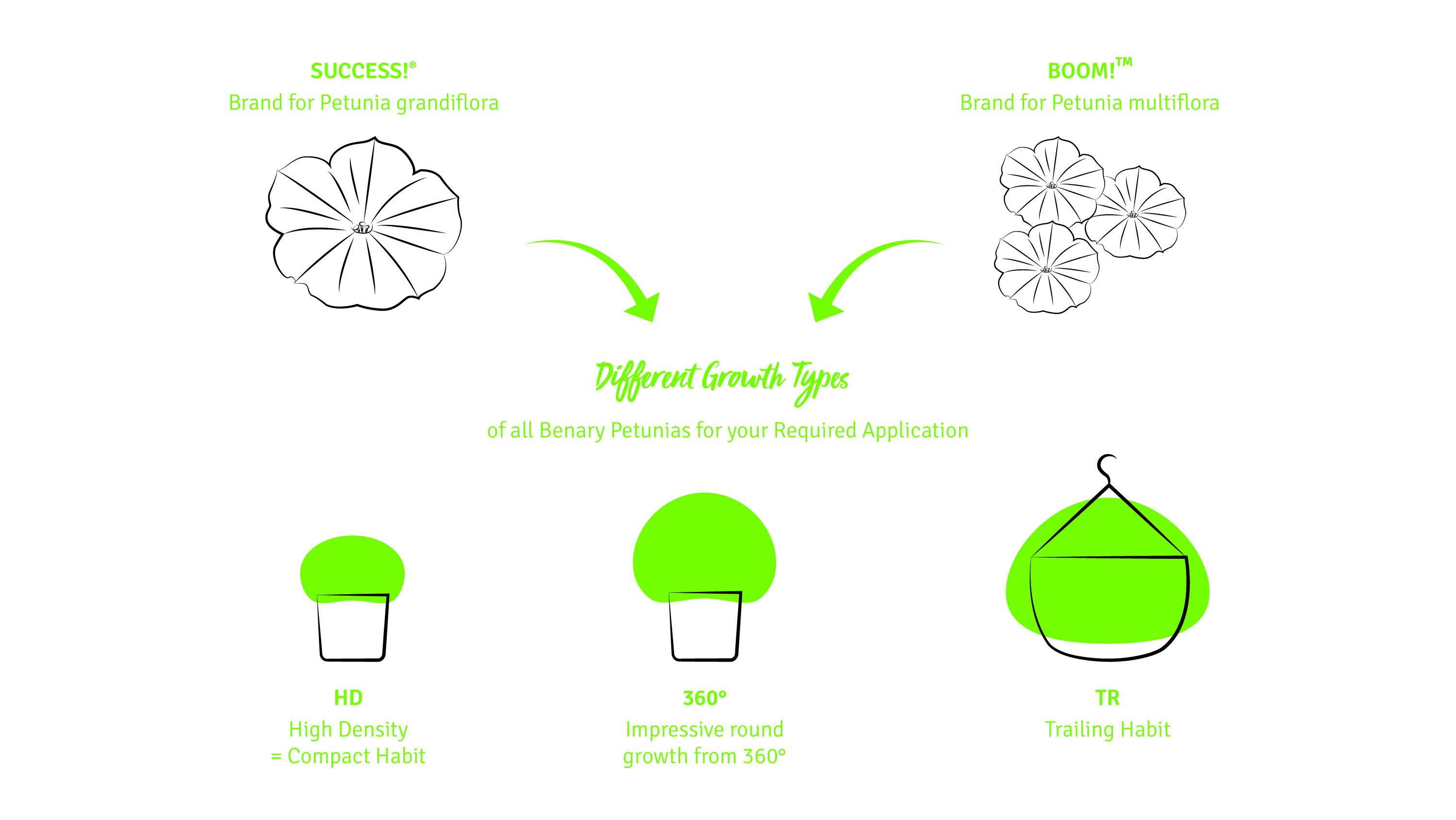
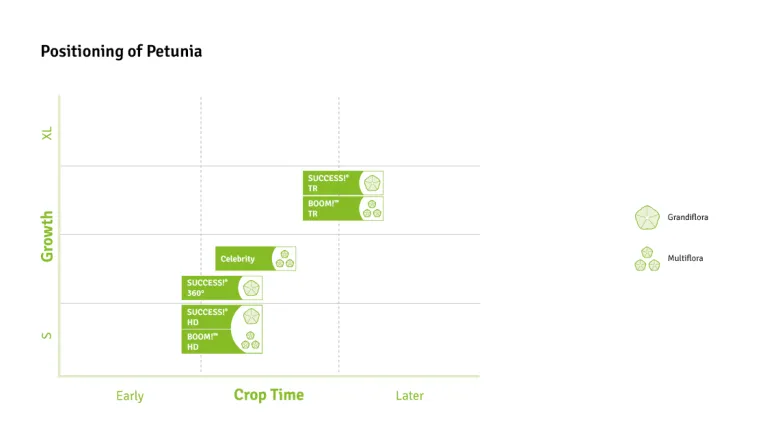
Transplant Ready: Transplant as soon as the roots reach the edges of the cell and can be removed without being disturbed too much. SUCCESS!® TR petunias are less day length sensitive and require fewer growth regulators than other trailing petunias.
Media: pH 5.5-5.8; EC 1.5-2.0.
Light: Provide 12-18 mol/m2/day (3,500-5,000 ft. candles) of light in the finishing stages. Petunias need long days to flower. To initiate bud under short days, extend day length to 14 hrs. Under long day, low light conditions, supplemental lighting of 350-500 ft. candles (3,500-5,000 lx) may be necessary.
Temperature: After transplant maintain temperatures > 13 °C (56 °F) nights for the first 6 weeks to initiate flower bud development. The night temperatures can be lowered further to 10 °C (50 °F) to encourage basal branching and compactness. However, lower temperatures may also substantially decrease the number of flowers initiated. Growing at cooler temperatures will produce a higher quality plant. An ADT (average daily temperature) of 19 °C (66 °F) will give the fastest finished crop.
Moisture: Alternate between moisture levels wet (4) and medium (2). Allow plants to almost reach a medium (2) before re-saturating to a wet (4).
Humidity: 40-60 % humidity is ideal. Providing good ventilation and horizontal airflow will help lower the humidity and dry back the media, providing oxygen to the roots.
Fertilizer: Feed at 100-200 ppm nitrogen. Under high light conditions, apply an ammonium based feed (17-5-17). To prevent stretching under low light conditions apply a calcium based feed (14-4-14). Under high light and long days an ammonium based feed (20-10-20) is preferred.
Growth Regulators: B-Nine (daminozide) as needed at 3,500-5,000 ppm. Apply B-Nine before the buds are visible. Late applications can delay flowering and reduce flower size. Also responsive to Bonzi and Piccolo sprays (paclobutrazol), Sumac (uniconazol) or B-Nine/ Cycocel (chlormequat chloride) tank mix. Light drenches of Bonzi or Piccolo (paclobutrazol) can be used once established in the final container.
Fungicide: Apply fungicides during long periods of low light and high humidity.
Common Diseases: Botrytis, rhizoctonia.
Pests: Primarily aphids.
Post Harvest: Fertilize with potassium nitrate at 100 ppm 1-2 weeks prior to shipping.
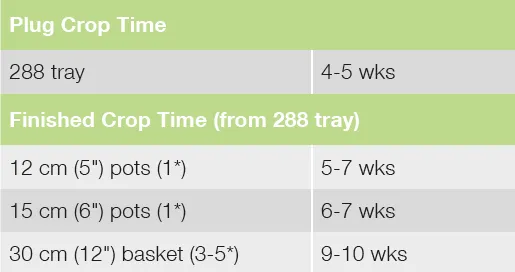
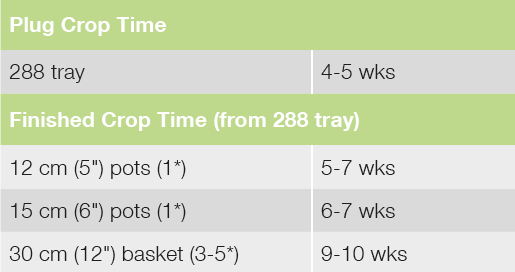
Plug Crop Time
288 tray: 4-5 weeks
Finished Crop Time (from 288 tray)
12 cm (5") pots (1*): 5-7 weeks
15 cm (6") pots (1*): 6-7 weeks
30 cm (12") basket (3-5*): 9-10 weeks
*plants per pot
Expert Tip
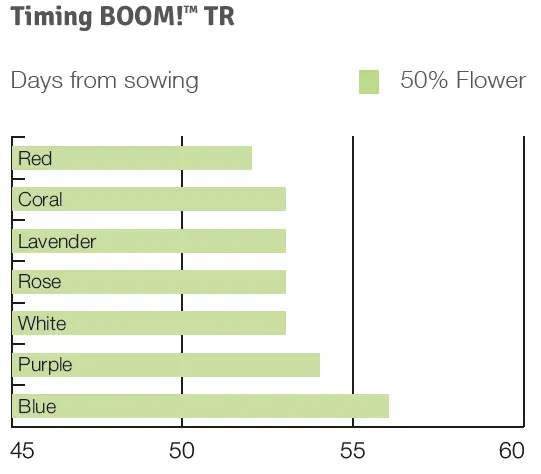
Early flowering and unrivaled in growth, habit, and timing uniformity. Mix and match any colors together for an easy combo that will time perfectly.
Moisture Codes
| Saturated (5) | Water is easily observed when finger is pressed on cell. Water moves freely from the top of the plug to the bottom. |
| Wet (4) | Media looks black and is not glistening. The media feels wet to the touch but there is very little water movement. |
| Moist (3) | Water is not easily visible. When finger is pressed on the cell there is very little movement from top to bottom. |
| Medium (2) | Media is not black, but now looks medium brown. There is no water movement when pressed with finger. |
| Dry (1) | Media has changed color to a very light brown and is dry to the touch. |
All information in our technical guide is based on our own trials and would therefore be as guideline only. Detailed cultivation aspects vary depending on climate, location, time of year and environmental conditions. Benary expressly disclaims any responsibility for the content of such data/information and makes no representation or warranty for the cultivation of any products listed. It is recommended that growers conduct a trial of products under their own conditions.