Inky
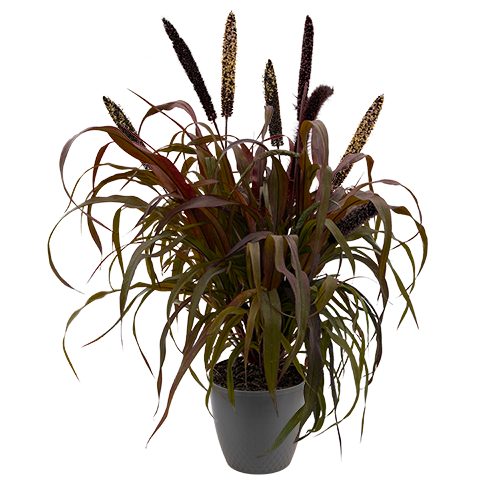
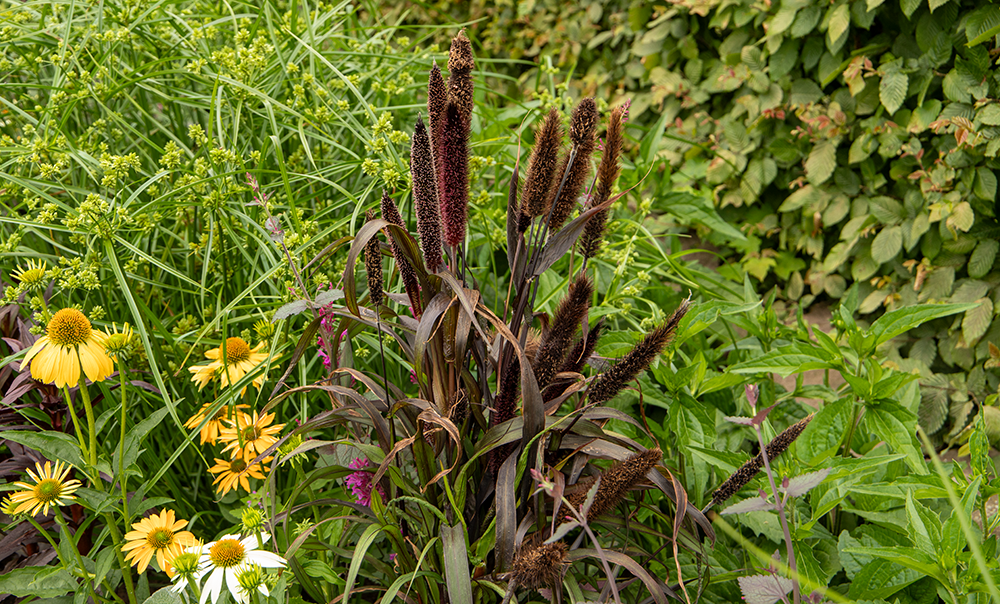
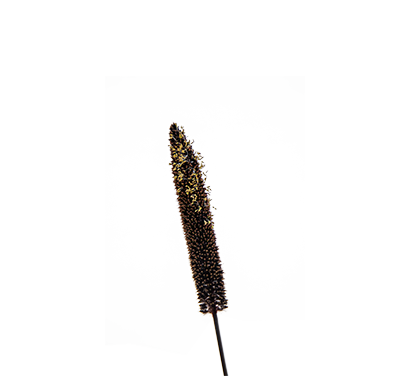
- Striking, large, red flower spikes on reddish-brown foliage
- Drought tolerant, vigorous millet grass
- Eye-catcher in mass landscape plantings, especially in autumn
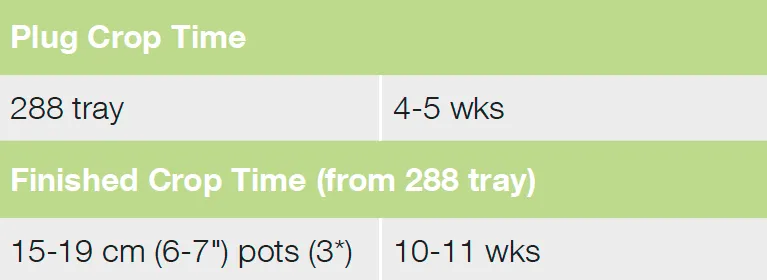
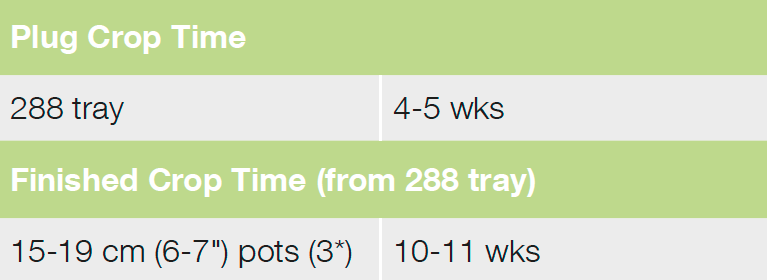
- Crop Time
- Spring: 14 - 16 weeks
- Height ∅
- 43 ″ / 110 cm
- Width ∅
- 14 ″ / 35 cm
- Exposure
- Sun - Partial shade
- Seed Form
- Raw Seed
- Product Use
- Landscape, Pots
- Foliage Color
- Red
- Plume Color
- Red
Technical Guide
Germination: Optimum conditions for seedling development, beginning on the day of sowing until radicle emergence. Expect germination in 5-8 days.
Cover: Cover the seeds. Light is not required for germination. Watering the seeds for 24 hours before sowing can be helpful.
Sowing method: 4-6 seeds per plug.
Media: pH 5.5-6.2; EC <0.7
Temperature: 22-24 °C (72-76 °F) until radicle emergence, then reduce to 20 °C (68 °F) during day and night.
Moisture: Begin with a saturated (5) for the first 8 days. Then keep the moisture constant between moisture levels wet (4) and moist (3).
Light: Supplemental lighting is not needed in the plug stage. If desired, provide light levels up to 35,000 lx before transplanting.
Fertilizer: Maintain an EC <0.7. Use a balanced fertilizer. Feeding should start <100 ppm N and gradually work up to 100-175 ppm N.
Growth Regulators: When sowing directly into the final pot, a spray of paclobutrazol at 6-8 ppm should be applied 4 weeks after sowing. Repetition can be required 10 days later.
Media: pH 5.5-6.5; EC 1.2-1.5
Temperature: 18-20 °C (64-68 °F) during day and night. Higher temperatures shorten the crop time of this warm-season crop.
Moisture: A rather dry cultivation is recommended to support an upright and compact growth of the plants. But avoid drought stress or overwatering.
Light: High light levels support a better basal branching including strong stems.
Fertilizer: High fertilization levels are required to avoid leaf chloroses. Feed with 150-200 ppm N using a complete fertilizer. Plants with nutrient deficiency will not perform well after transplanting.
Growth Regulators: One week after transplanting, a spray of paclobutrazol at 3-5 ppm will be useful.
Pests & Diseases: Chloroses.
Moisture Codes
| Saturated (5) | Water is easily observed when finger is pressed on cell. Water moves freely from the top of the plug to the bottom. |
| Wet (4) | Media looks black and is not glistening. The media feels wet to the touch but there is very little water movement. |
| Moist (3) | Water is not easily visible. When finger is pressed on the cell there is very little movement from top to bottom. |
| Medium (2) | Media is not black, but now looks medium brown. There is no water movement when pressed with finger. |
| Dry (1) | Media has changed color to a very light brown and is dry to the touch. |
All information in our technical guide is based on our own trials and would therefore be as guideline only. Detailed cultivation aspects vary depending on climate, location, time of year and environmental conditions. Benary expressly disclaims any responsibility for the content of such data/information and makes no representation or warranty for the cultivation of any products listed. It is recommended that growers conduct a trial of products under their own conditions.