New Look®
Item no.: CP0101PExtravagant
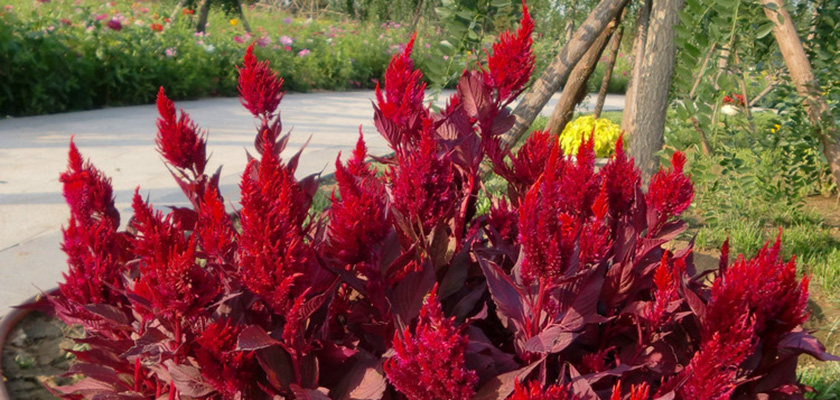
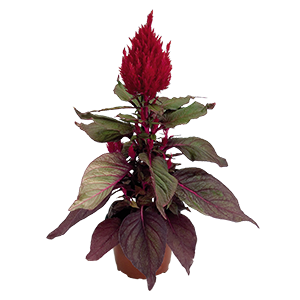
- Dark, bronze-colored foliage
- Bright red flower color as contrast
- Long lasting plumes draw attention
- Heat tolerant


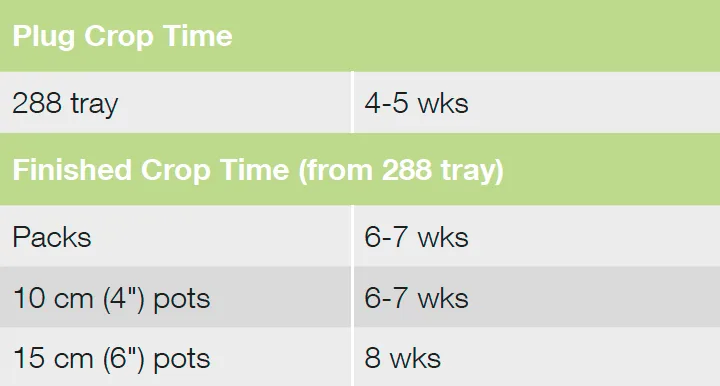
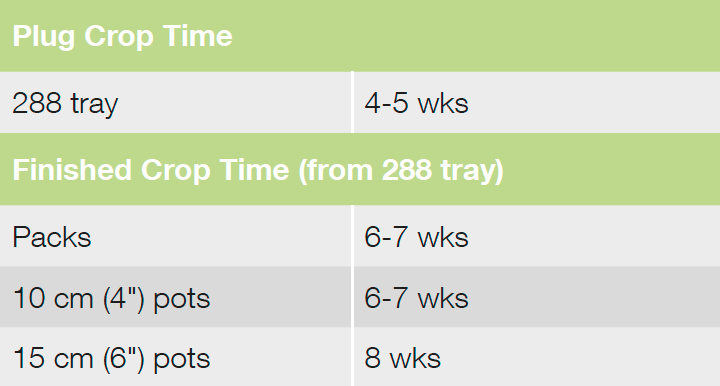
- Crop Time
- Spring: 10 - 12 weeks
- Height ∅
- 13 ″ / 33 cm
- Width ∅
- 7 ″ / 18 cm
- Exposure
- Sun
- Seed Form
- Pelleted Seed
- Product Use
- Packs, Pots, Mixed Containers, Landscape
- Family, Origin
- Amaranthaceae, Africa and South America
- Minimum Germ. Rate
- 85%
Technical Guide
Flowering Type: Obligate short day plant, requiring short days to initiate flowering.
Flowering Mechanism: Higher light intensity and warmer temperature will decrease the number of days to flower.
Germination: Optimum conditions for seedling development, beginning on the day of sowing until radicle emergence. Expect radicle emergence in 2-4 days.
Germination: Optimum conditions for seedling development, beginning on the day of sowing until radicle emergence. Expect radicle emergence in 2-4 days.
Cover: Cover seed with a light layer of vermiculite.
Sowing method: 1 seed per plug.
Media: pH 5.5-6.0; EC 0.5 <.
Temperature: Germination temperature of 22-25 °C (72-78 °F) for the first 7-14 days. On day 14 reduce the temperature to 18-20 °C (64-68 °F).
Moisture: Begin with a saturated (5) media moisture level to remove the seed coating and then reduce the moisture level to a wet (4) on day 2-3. Alternate between a wet (4) and a moist (3) until all seeds have germinated.
Humidity: 95-100 % until day 5; then reduce to 40-60 %. Provide proper ventilation and horizontal airflow to improve oxygen levels in the media.
Light: Requires light for germination. Provide long days > 13 hrs. for the first 10-21 days to bulk the plant and prevent premature flower initiation. The Glorious series only requires 10-14 days to bulk the seedlings. Keep the light levels low at 6 mol/m2/day (2,000 ft. candles or 20,000 lx).
Fertilizer: On day 5 begin fertilizing at 50 ppm using a well balanced feed. Use a 17-5-17 fertilizer or similar and include supplemental iron at 0.5 ppm. Maintain the EC at 0.75.
Plug Bulking and Flower Initiation: Optimum conditions during the vegetative stage from cotyledon expansion to flower initiation. This stage is when the seedlings root to the edge of the plug and reach the 2-4 true leaf stage where flower initiation occurs.
Media: pH 5.5-6.0; EC 1.0-1.25. Use a well drained media low in soluble salts.
Light: Light levels can be increased to 8-10 mol/ m2/day, 2,500-3,000 ft. candles (25,000-30,000 lx).
Temperature: Maintain night temperatures of 17-18 °C (62-64 °F) and day temperatures of 21-23 °C (70-73 °F).
Moisture: Alternate between moisture levels of wet (4) and medium (2). Let the moisture level approach a medium (2) before re-saturating to a wet (4). Never allow the media to dry out completely.
Fertilizer: Increase the fertilizer levels by feeding at 100-150 ppm using a well balanced 17-5-17 fertilizer. Under high light conditions a 20-10-20 fertilizer can also be used at the same rate.
Growth Regulators: Applications of B-Nine (daminozide) sprays at 2,500 ppm work well. Bonzi (paclobutrazol) sprays and drenches can also be used. Sprays of paclobutrazol at 2-3 ppm and light drenches can be used.
Fungicides: Preventative applications of fungicides may be used for the control of rhizoctonia and pythium.
Media: pH 5.5-6.0; EC 1.25-1.5.
Light: Provide light levels of 12-16 mol/m2/day (3,500-4,500 ft. candles or 35,000-45,000 lx). Under long day conditions, in the late spring and summer, giving well established plants a short day treatment of less than 12 hrs. will shorten the finished height.
Temperature: 17-18 °C (62-64 °F) night, 18-21 °C (64-70 °F) day for the first 7-10 days or until the roots reach the bottom of the container. Thereafter the temperature may be lowered to 16-17 °C (60-62 °F) night and 18-21 °C (64-70 °F) day. An ADT (average daily temperature) of 19 °C (66 °F) will give the fastest finished crop.
Moisture: Alternate between moisture levels wet (4) and medium (2). In the final stages make sure to let the media dry back adequately between watering. Never allow the plants to dry out completely.
Humidity: 40-60 % humidity is ideal. Providing good ventilation and horizontal airflow will help lower the humidity and dry back the media.
Fertilizer: Celosia require a moderate feed program. Fertilize with a complete fertilizer, 17-5-17 at 150-200 ppm. Under higher light conditions use a 20-10-20 fertilizer or alternate between the two.
Growth Regulators: Applications of B-Nine (daminozide) sprays at 2,500 ppm work well. Bonzi (paclobutrazol) sprays and drenches can also be used. Sprays of paclobutrazol at 2-3 ppm and light drenches at ½-1 ppm can be used.
Fungicide: Apply fungicides during long periods of low light and high humidity.
Common Diseases: Botrytis, pythium and rhizoctonia.
Pests: Primarily aphids and thrips.
Post Harvest: Fertilize with potassium nitrate at 100 ppm 1-2 weeks prior to shipping.
Moisture Codes
| Saturated (5) | Water is easily observed when finger is pressed on cell. Water moves freely from the top of the plug to the bottom. |
| Wet (4) | Media looks black and is not glistening. The media feels wet to the touch but there is very little water movement. |
| Moist (3) | Water is not easily visible. When finger is pressed on the cell there is very little movement from top to bottom. |
| Medium (2) | Media is not black, but now looks medium brown. There is no water movement when pressed with finger. |
| Dry (1) | Media has changed color to a very light brown and is dry to the touch. |
All information in our technical guide is based on our own trials and would therefore be as guideline only. Detailed cultivation aspects vary depending on climate, location, time of year and environmental conditions. Benary expressly disclaims any responsibility for the content of such data/information and makes no representation or warranty for the cultivation of any products listed. It is recommended that growers conduct a trial of products under their own conditions.