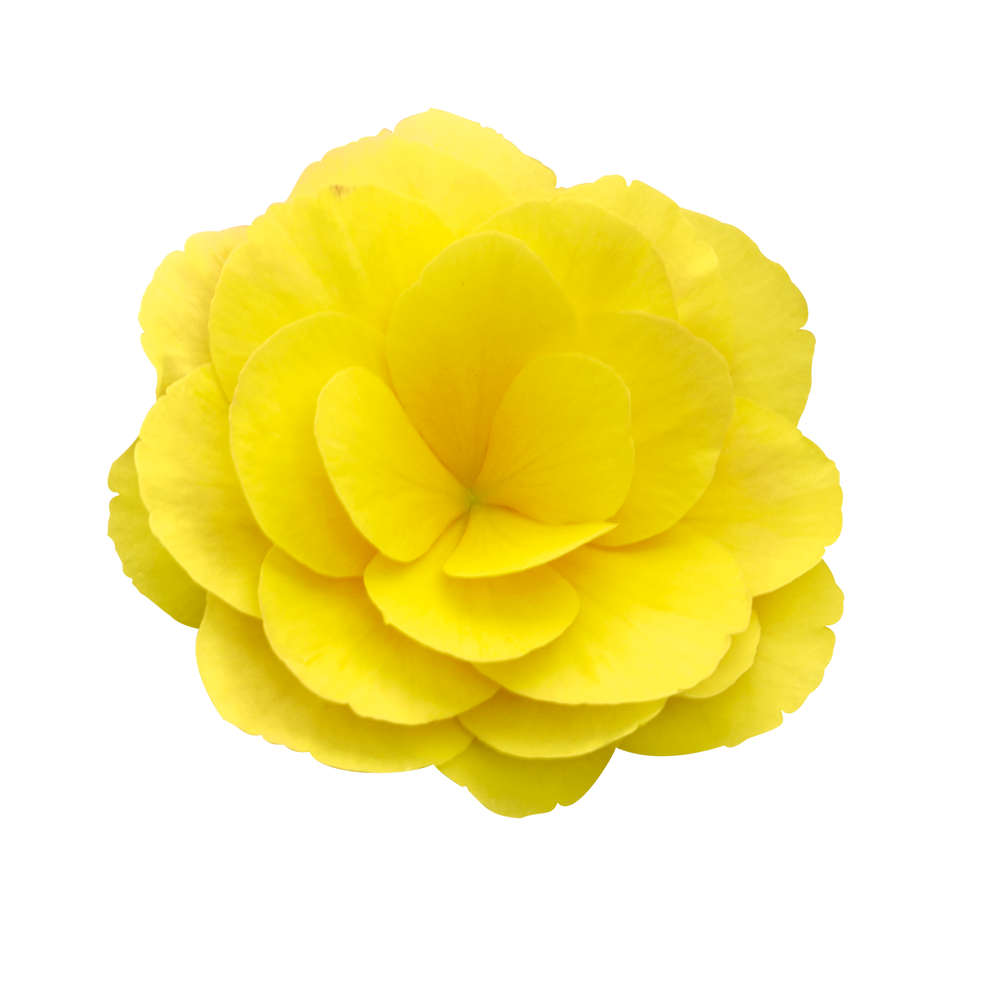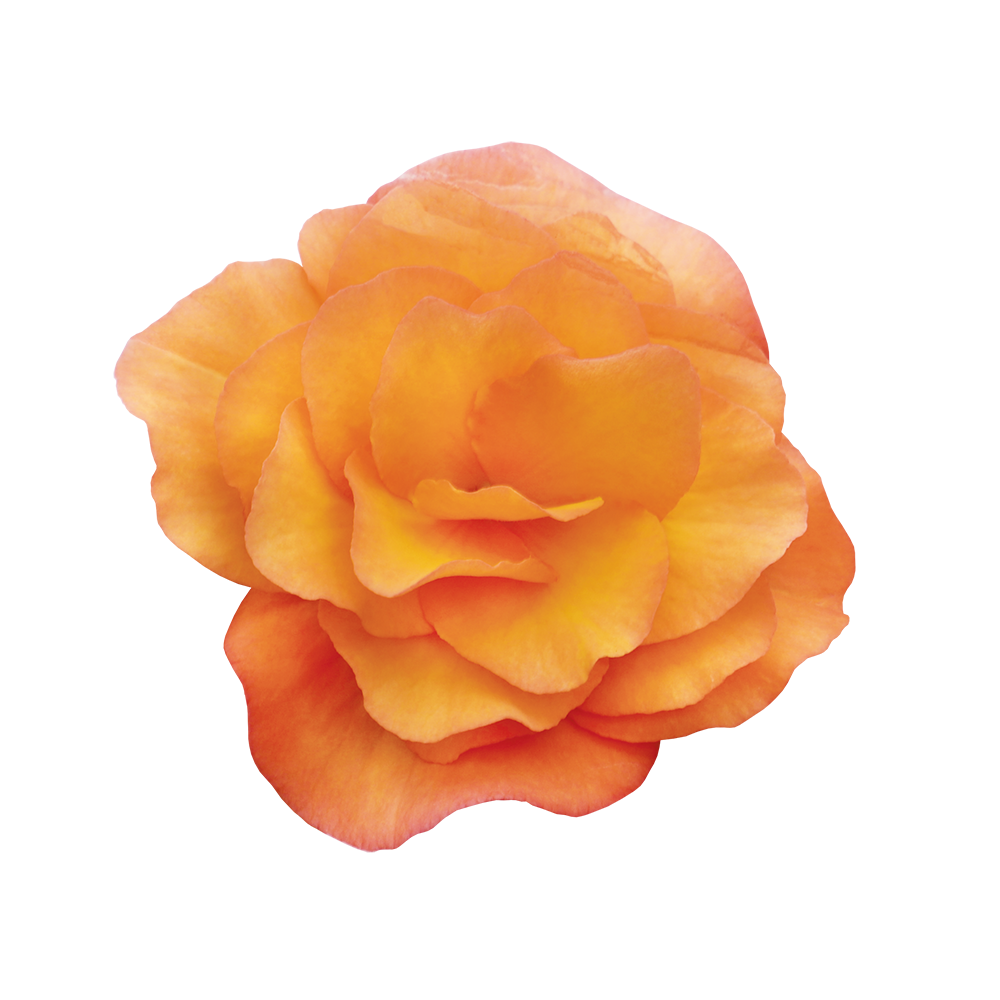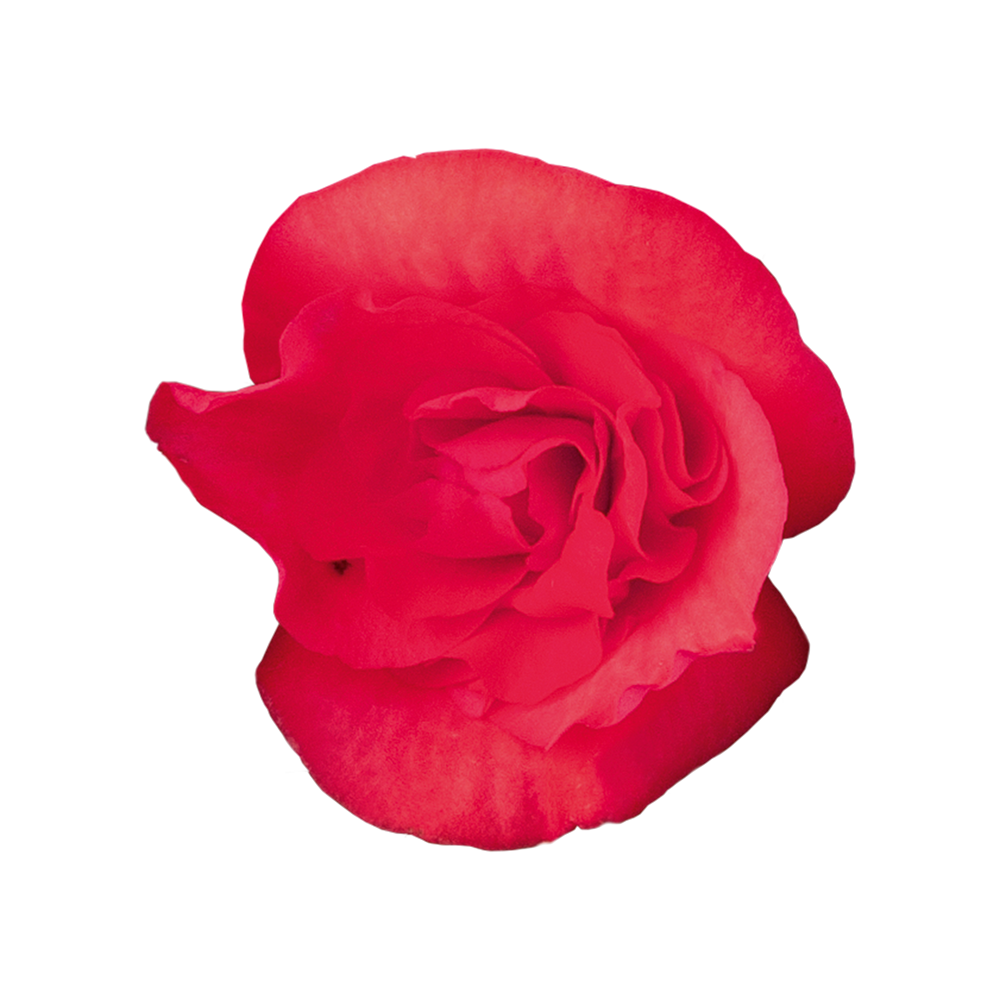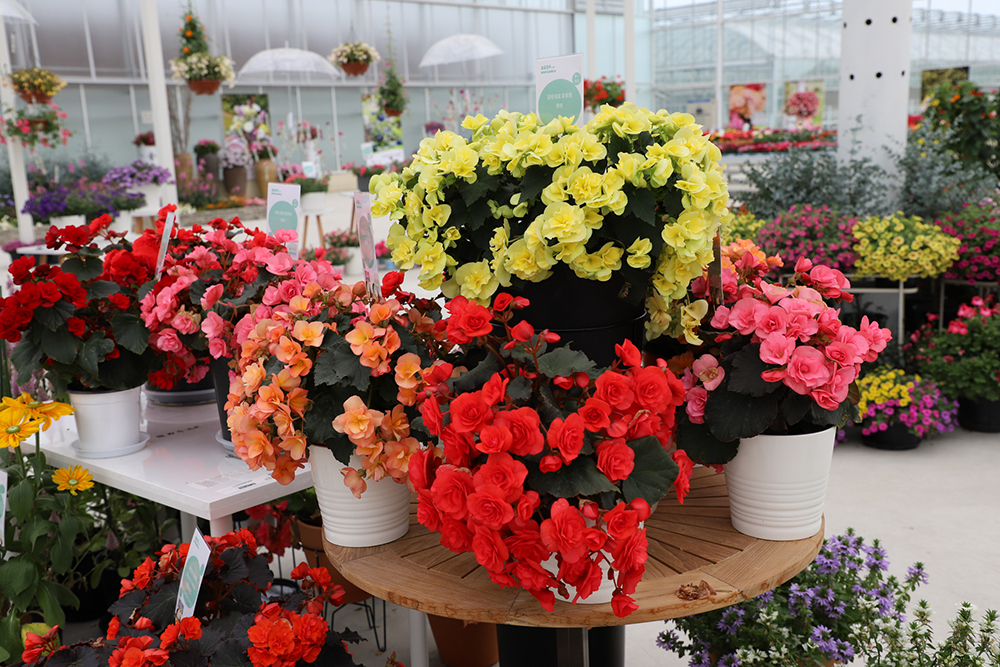
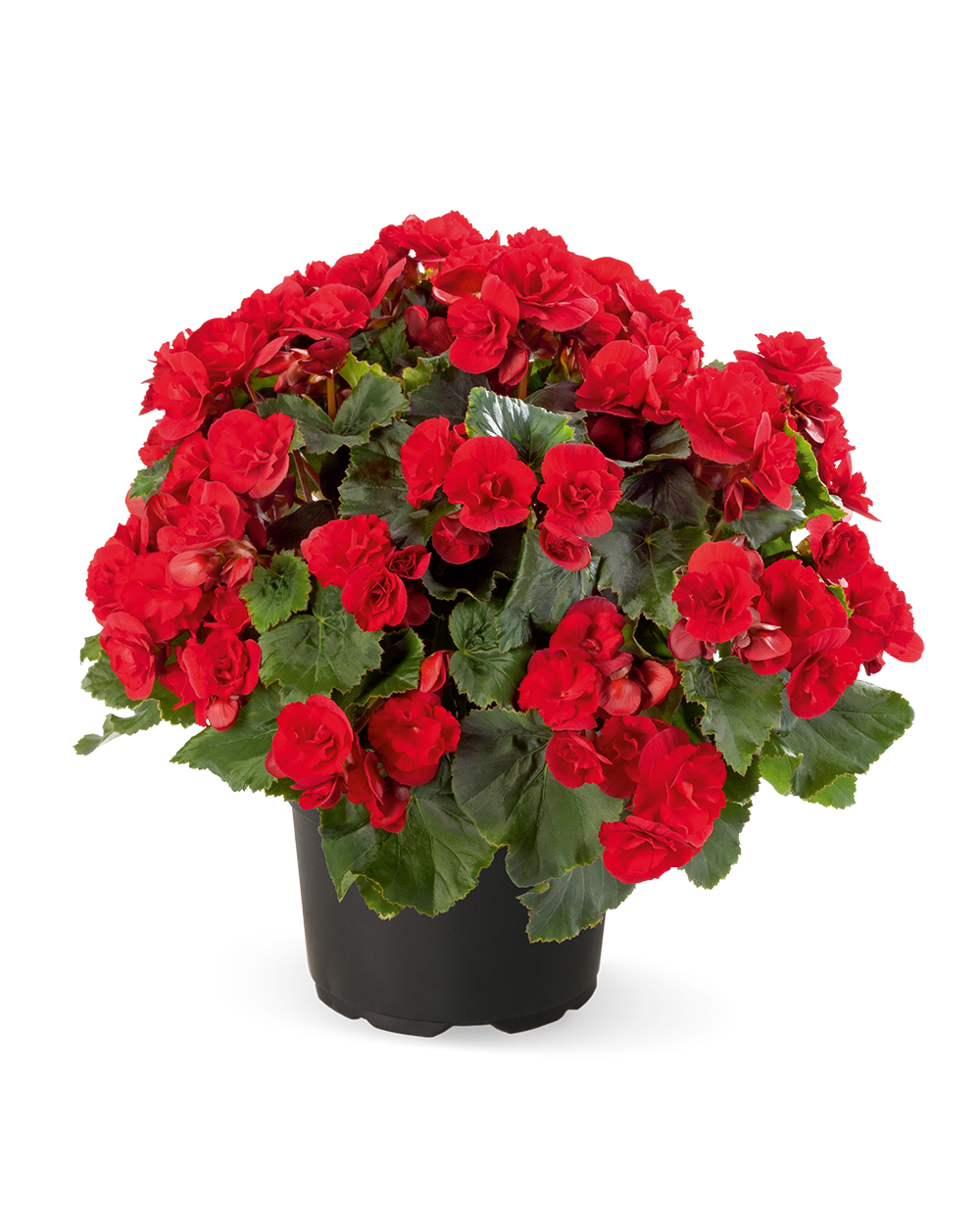
Solenia®
Youngplants are available from our partners Beekenkamp Plants BV & Dümmen Orange North America
- Impressive performance in full sun as well as in shade
- Amazing heat and rain tolerance
- Premium product, suitable for pots, containers and hanging baskets
- Crop Time
- Spring: 14 - 16 weeks
- Height ∅
- 9 ″ / 23 cm
- Width ∅
- 11 ″ / 28 cm
- Exposure
- Sun - Shade
- Seed Form
- Cuttings
- Product Use
- Pots, Mixed Containers, Hanging Baskets, Landscape
- Family, Origin
- Begoniaceae, South America
Technical Guide
Flowering Type: Obligate long day plant. A day length > 14 hours will result in good vegetative growth and flower initiation.
Flowering Mechanism: High light intensity and warm temperatures will promote earlier flowering. Supplemental lighting during rooting phase will be beneficial.
ROOTING
Sticking method: A 45 mm plug is optimal. Direct sticking is also possible. Unrooted cuttings can be stored at 8-10 °C (46-50 °F) for maximum two days.
Media: pH 5.5-5.8; EC 0.8-1.0.
Temperature: 23-24 °C (74-76 °F) after sticking. Bottom or floor heat is recommended for optimal rooting. For irrigation use warm water only. After 3 weeks, the temperature can be lowered to 20-22 °C (68-72 °F), optionally even to 18-20 °C (64-68 °F) after 3 weeks.
Moisture: After sticking, the trays must be watered immediately. Moist substrate and high humidity are crucial for successful rooting of Begonias. Begin with a saturated level (5) and a plastic cover for the first 10-15 days. Then alternate between a wet (4) and a moist (3). It is then important to maintain a good wet to dry cycle where the media will dry back within a specific period. Good ventilation and horizontal airflow will create such an environment. Avoid overwatering.
Light: Protect the plants from direct sunlight or extreme light conditions. Long day treatment above 14 hours is required, especially for rooting.
Fungicides: A fungicide should be used as a preventive measure against phytium and phytophtora, for example Proplant. As biological alternative the prestop fungus (Clonostachys rosea) can be used against phytium, phytophtora and fusarium.
Media: pH 5.5‑6.0; EC 1.0‑1.5. Use a well‑drained media.
Light: Protect the plants from direct sunlight. Supplemental lighting reduces the crop time and disease risk, and also improves branching and early flowering. Provide at least 3,000 ft. candles (30,000 lx), especially during dark months of autumn through spring.
Temperature: After transplanting, maintain 20 °C (68 °F) day and night for the first 2-3 weeks. Then the temperatures can be lowered to 17‑19 °C (63‑66 °F). With proper temperature management, the plant height can be perfectly controlled.
Moisture: After transplanting, keep moist (3) and water from above until the plants are well‑rooted. Watering should then take place from underneath, if possible. A rather dry cultivation is recommended for the finishing to support an upright and compact growth of the plants. Avoid drought stress or overwatering.
Humidity: Maintain relative humidity below 60%. Higher levels increase the risk of botrytis, mildew and other diseases. Providing good ventilation and horizontal airflow will help lower the humidity and dry back the media, providing oxygen to the roots.
Fertilizer: Moderate to high fertilization levels are required. Fertilize the crop weekly with a complete balanced fertilizer (15-5-15). In addition, a slow-release fertilizer such as Osmocote is recommended, as the total fertilizer requirements of Begonia elatior are higher compared to tuberous begonias. Maintain an EC of at least 1.0 in the media to reduce the appearance of single flowers.
Growth Regulators: Proper moisture, light and temperature management help to control the growth without PGR. If needed, apply Cycocel (chlormequat chloride) as a spray at 250-300 ppm 1-2 weeks after transplanting. In addition, the plants can be softly pinched at this stage when growing in larger pots or during the winter months. Growth control can be influenced by 1-2 applications of Cycocel at 500-750 ppm or Bonzi drenches at 2-3 ppm. Higher concentrations may easily cause leaf damages or stop the growth
Fungicides: Apply fungicides during long periods of low light and high humidity.
Common Diseases: Botrytis, fusarium, mildew, phytophtora, phytium.
Pests: Aphids, thrips.
Rooting Time
60 tray: 4-5 weeks
Finished Crop Time
12-15 cm (5-6") pots (1*): 9-10 weeks
17-19 cm (7") pots (2*): 10-11 weeks
25 cm (10") pots (3*): 11-12 weeks
*plugs per pot
Moisture Codes
| Saturated (5) | Water is easily observed when finger is pressed on cell. Water moves freely from the top of the plug to the bottom. |
| Wet (4) | Media looks black and is not glistening. The media feels wet to the touch but there is very little water movement. |
| Moist (3) | Water is not easily visible. When finger is pressed on the cell there is very little movement from top to bottom. |
| Medium (2) | Media is not black, but now looks medium brown. There is no water movement when pressed with finger. |
| Dry (1) | Media has changed color to a very light brown and is dry to the touch. |
All information in our technical guide is based on our own trials and would therefore be as guideline only. Detailed cultivation aspects vary depending on climate, location, time of year and environmental conditions. Benary expressly disclaims any responsibility for the content of such data/information and makes no representation or warranty for the cultivation of any products listed. It is recommended that growers conduct a trial of products under their own conditions.