Bunny
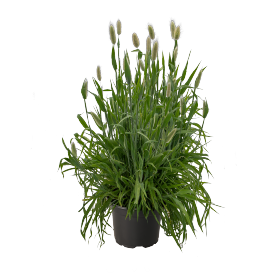
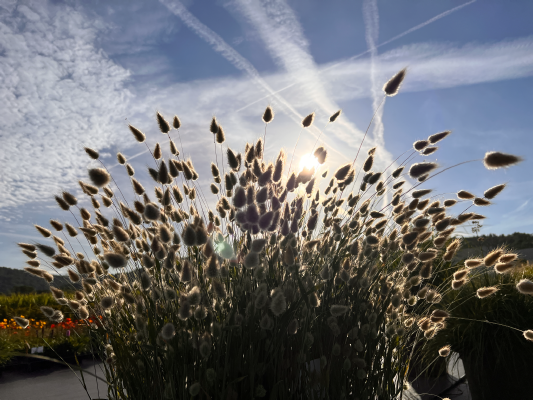
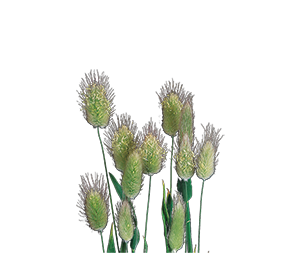
- Bunny tail grass with fluffy, white spikelets
- Suitable for pot and container production
- Perfect landscape performance
- Excellent for dried flower production
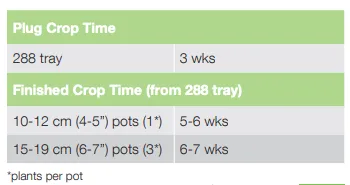
- Crop Time
- Spring: 8 - 10 weeks
- Height ∅
- 18 ″ / 45 cm
- Width ∅
- 14 ″ / 35 cm
- Exposure
- Sun - Shade
- Seed Form
- Raw Seed
- Product Use
- Landscape, Cutflower
Technical Guide
Germination: Optimum conditions for seedling development, beginning on the day of sowing until radicle emergence. Expect germination in 4-8 days.
Cover: No cover is required.
Sowing method: 3-5 seeds per plug.
Media: pH 5.5-6.2; EC <0.7
Temperature: Cooler temperatures of 15-18 °C (58-64 °F) promote germination of Lagurus.
Moisture: Begin with a wet (4) for the first days of germination. Alternate between moisture levels moist (3) and medium (2) to maintain a good wet to dry cycle. Avoid overwatering.
Light: Light is required for germination. Provide light levels of 30,000 lx which can be increased to 50,000 lx before transplanting.
Fertilizer: Maintain an EC <0.7. Use a balanced fertilizer. Feeding should start <100 ppm N.
Growth Regulators: To promote basal branching and to avoid long flower stems, a light application of chlormequatchlorid can be used.
Media: pH 5.5-6.2; EC 1.0-1.2
Temperature: 12-15 °C (54-58 °F) during day and night. Cool temperatures up to a minimum of 10 °C (50 °F) promote a compact, wellbranched plant habit with stable stems in pots.
Moisture: Alternate between moisture levels moist (3) and medium (2) to maintain a good wet to dry cycle. Avoid overwatering.
Light: High light levels shorten the crop time.
Fertilizer: Low to moderate fertilization levels are required. If desired, a light application of a nitrate-based fertilizer can be used.
Growth Regulators: Light drenches 1-2 weeks after transplanting are very effective. Apply chlormequatchlorid as in plug stage. Height can be controlled by temperature and moisture management.
Pests & Diseases: Rust.

Moisture Codes
| Saturated (5) | Water is easily observed when finger is pressed on cell. Water moves freely from the top of the plug to the bottom. |
| Wet (4) | Media looks black and is not glistening. The media feels wet to the touch but there is very little water movement. |
| Moist (3) | Water is not easily visible. When finger is pressed on the cell there is very little movement from top to bottom. |
| Medium (2) | Media is not black, but now looks medium brown. There is no water movement when pressed with finger. |
| Dry (1) | Media has changed color to a very light brown and is dry to the touch. |
All information in our technical guide is based on our own trials and would therefore be as guideline only. Detailed cultivation aspects vary depending on climate, location, time of year and environmental conditions. Benary expressly disclaims any responsibility for the content of such data/information and makes no representation or warranty for the cultivation of any products listed. It is recommended that growers conduct a trial of products under their own conditions.